Designing intelligent learning systems that align strategy, AI-enabled technology, and measurable performance.


M.Sc.Ed., BBA
Portfolio


Training Blog
2026 © Michael Madill • All Rights Reserved.
I’m Michael Madill, a Learning & Development leader with over 15 years of experience designing and scaling modern learning ecosystems for organizations navigating growth, change, and complexity.
My work sits at the intersection of instructional design, learning technology, analytics, and AI-enabled automation — helping organizations move beyond content delivery toward measurable performance impact.
Core Expertise:








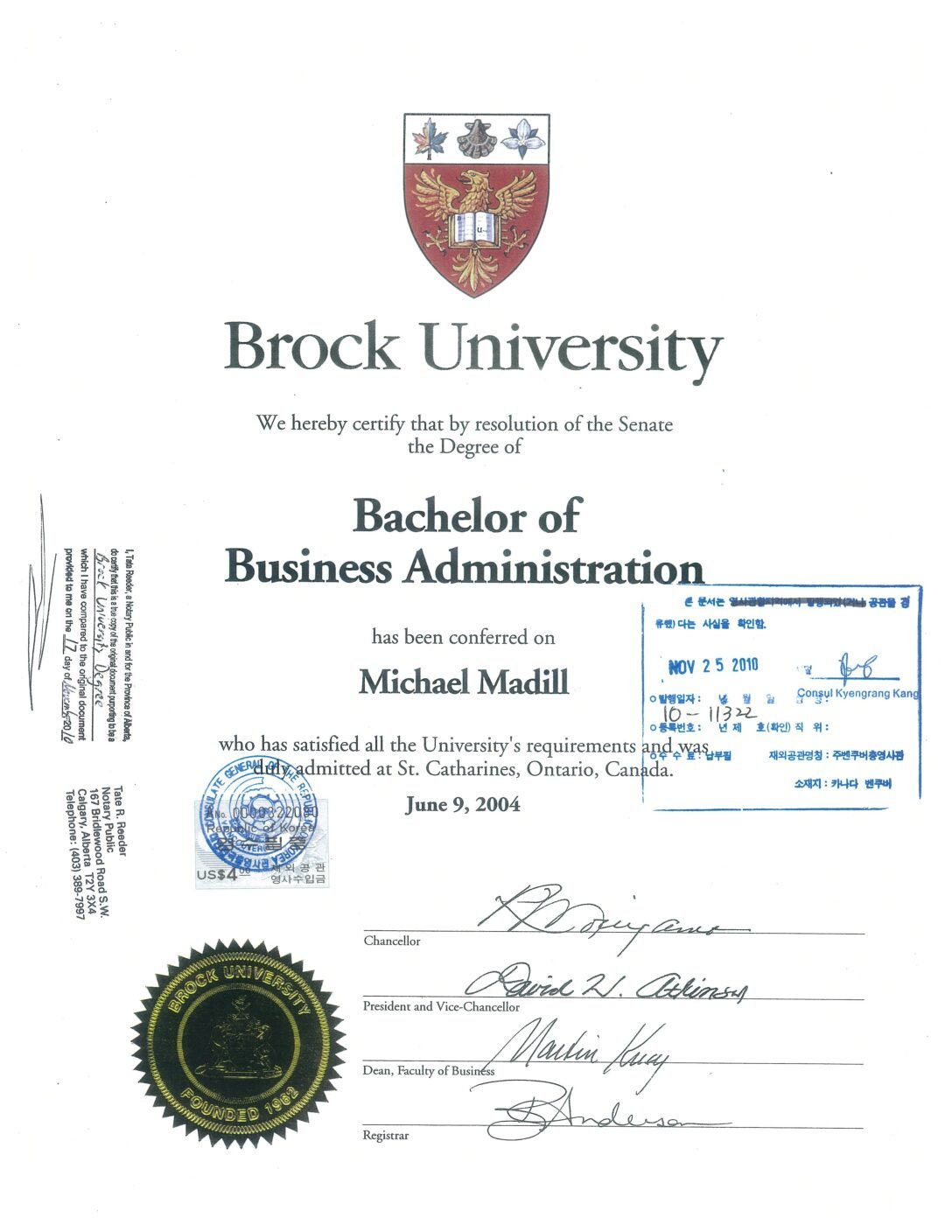

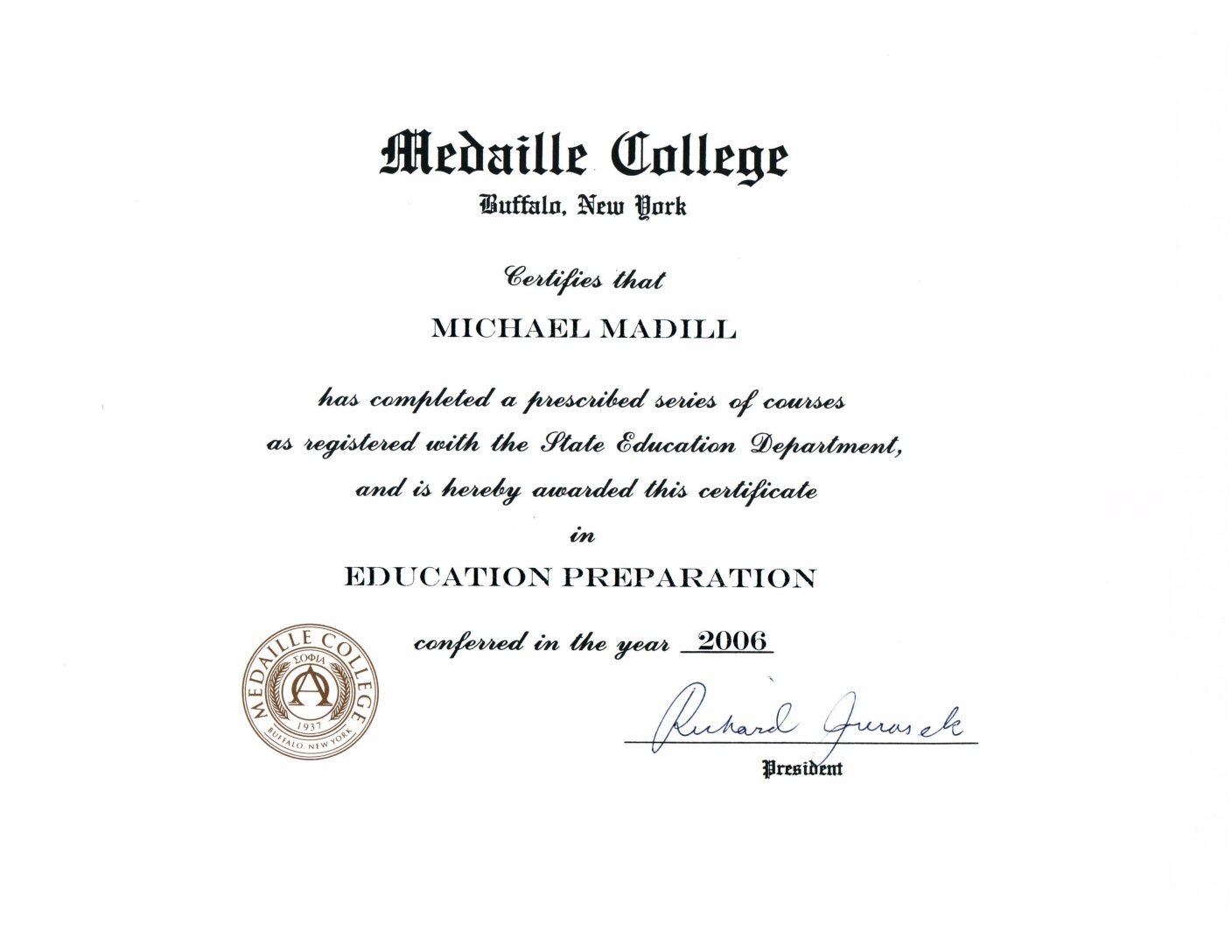











I bring over 15 years of experience leading corporate learning, instructional design, and learning technology initiatives across global, distributed organizations. My work focuses on building scalable learning systems that improve capability, engagement, and performance — supported by analytics and modern learning platforms.


“Michael brings a unique blend of strategic thinking, instructional design mastery, and technical expertise. His learning solutions consistently drive performance, engagement, and measurable results.”
Sarah Thompson
Director, Learning & Organizational Development



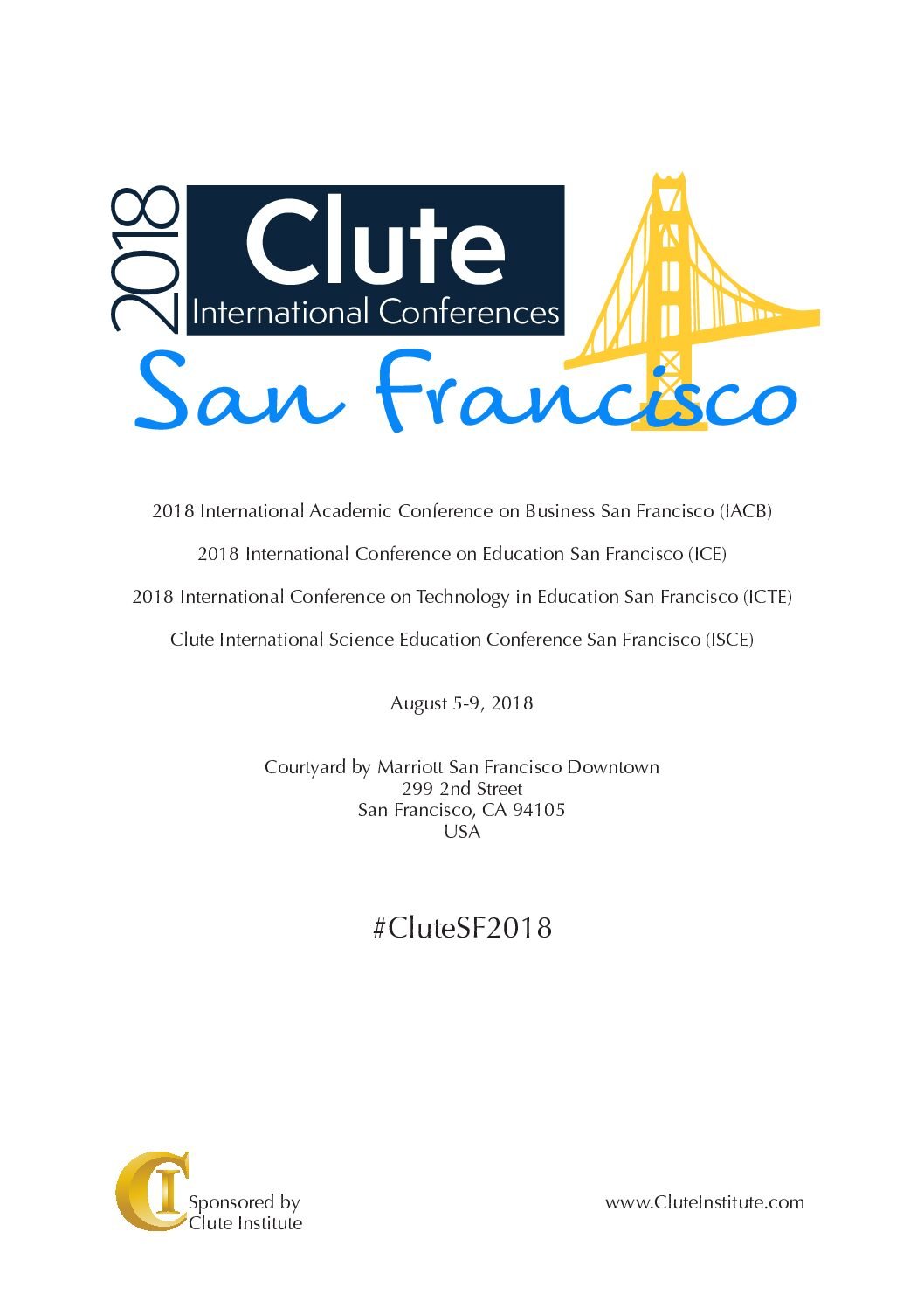
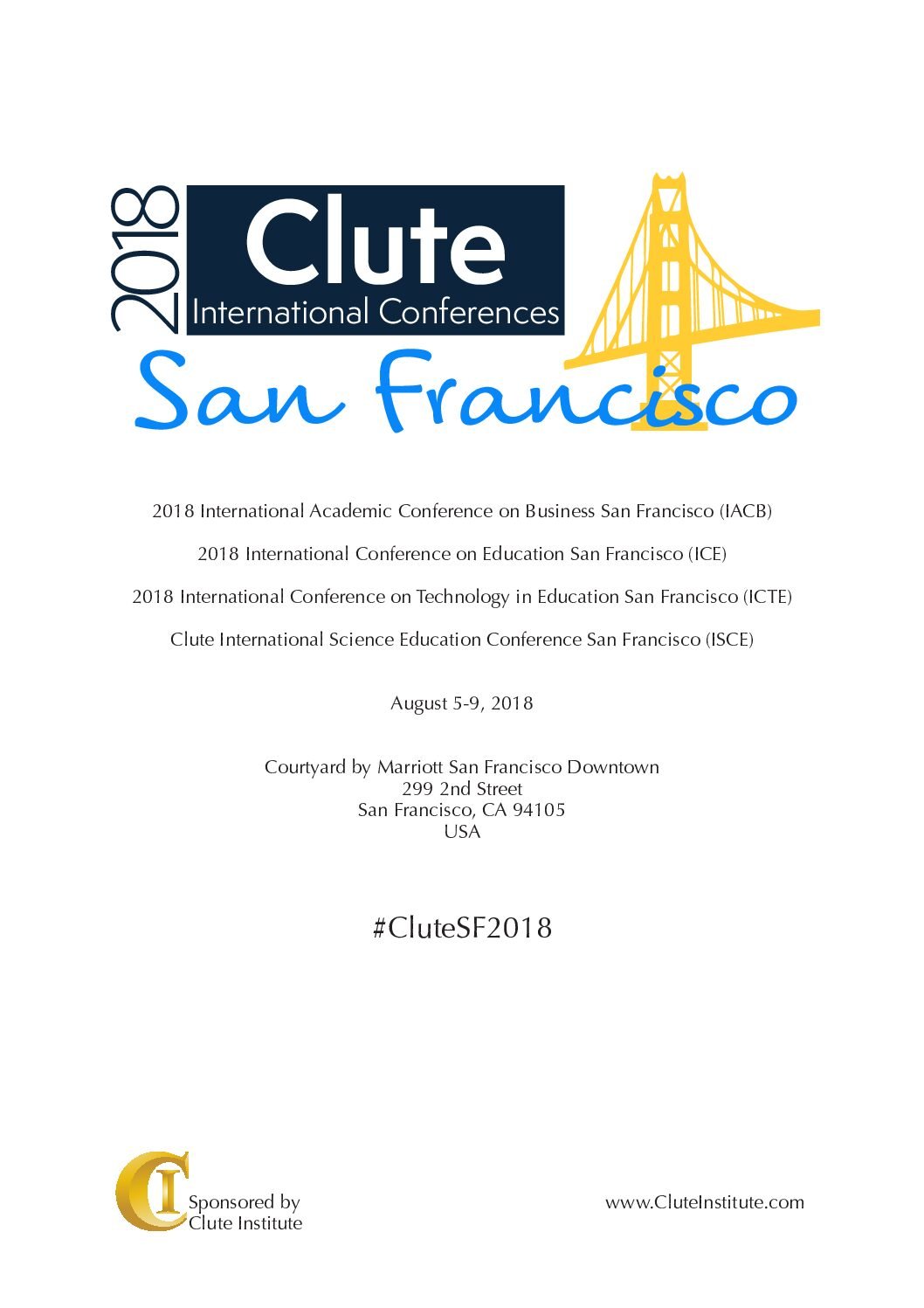



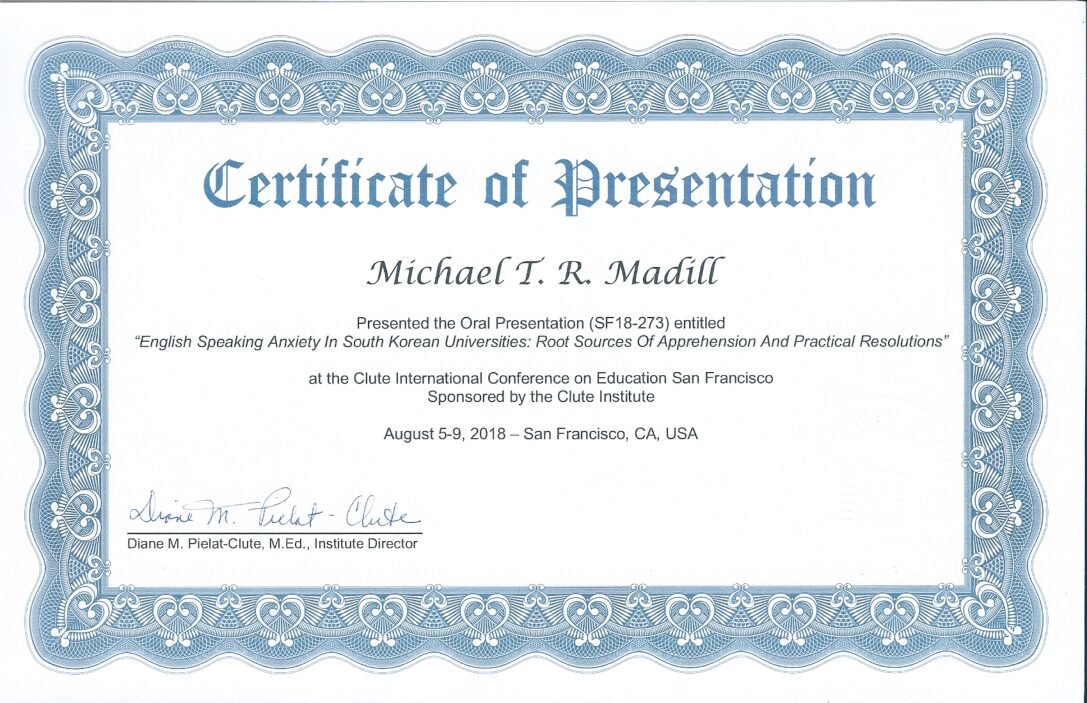

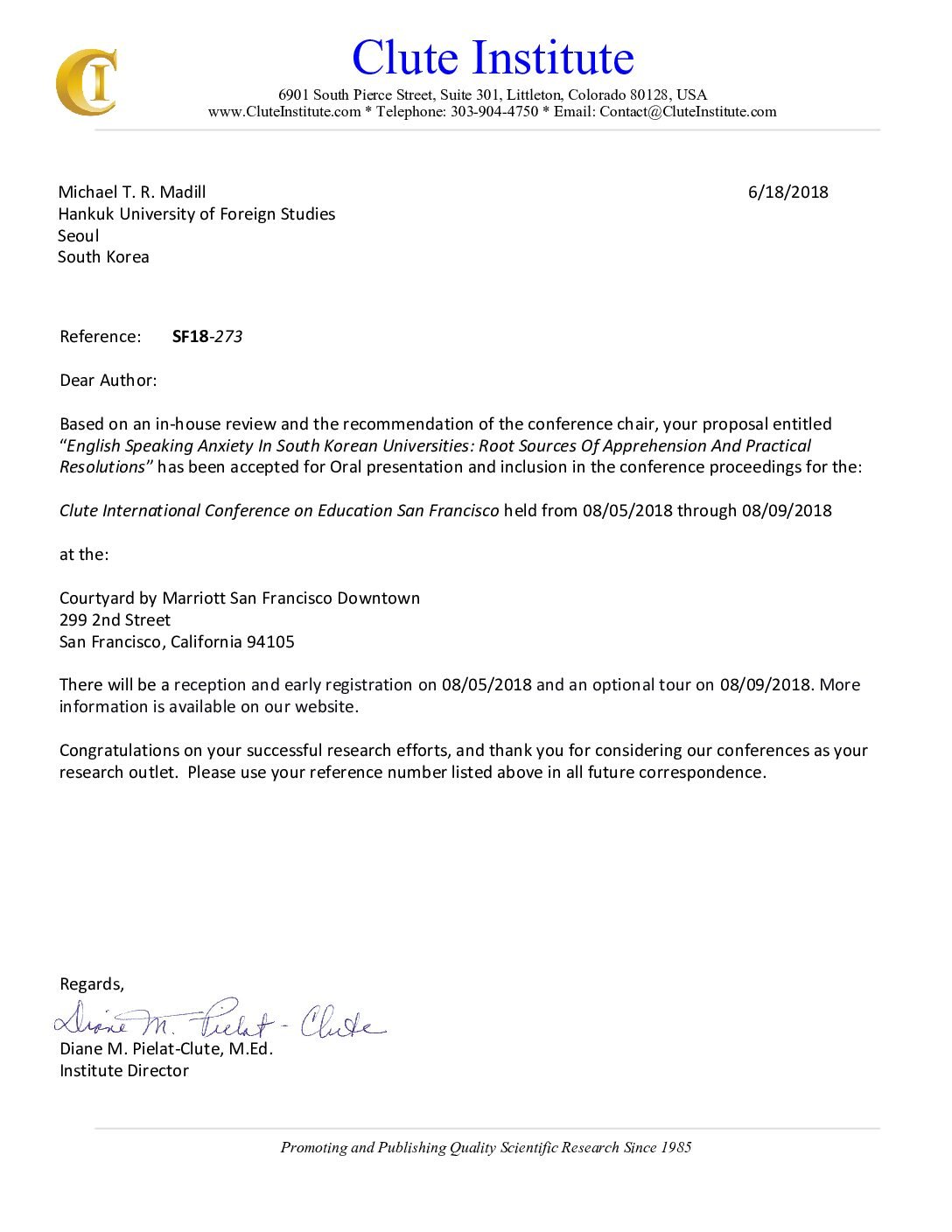
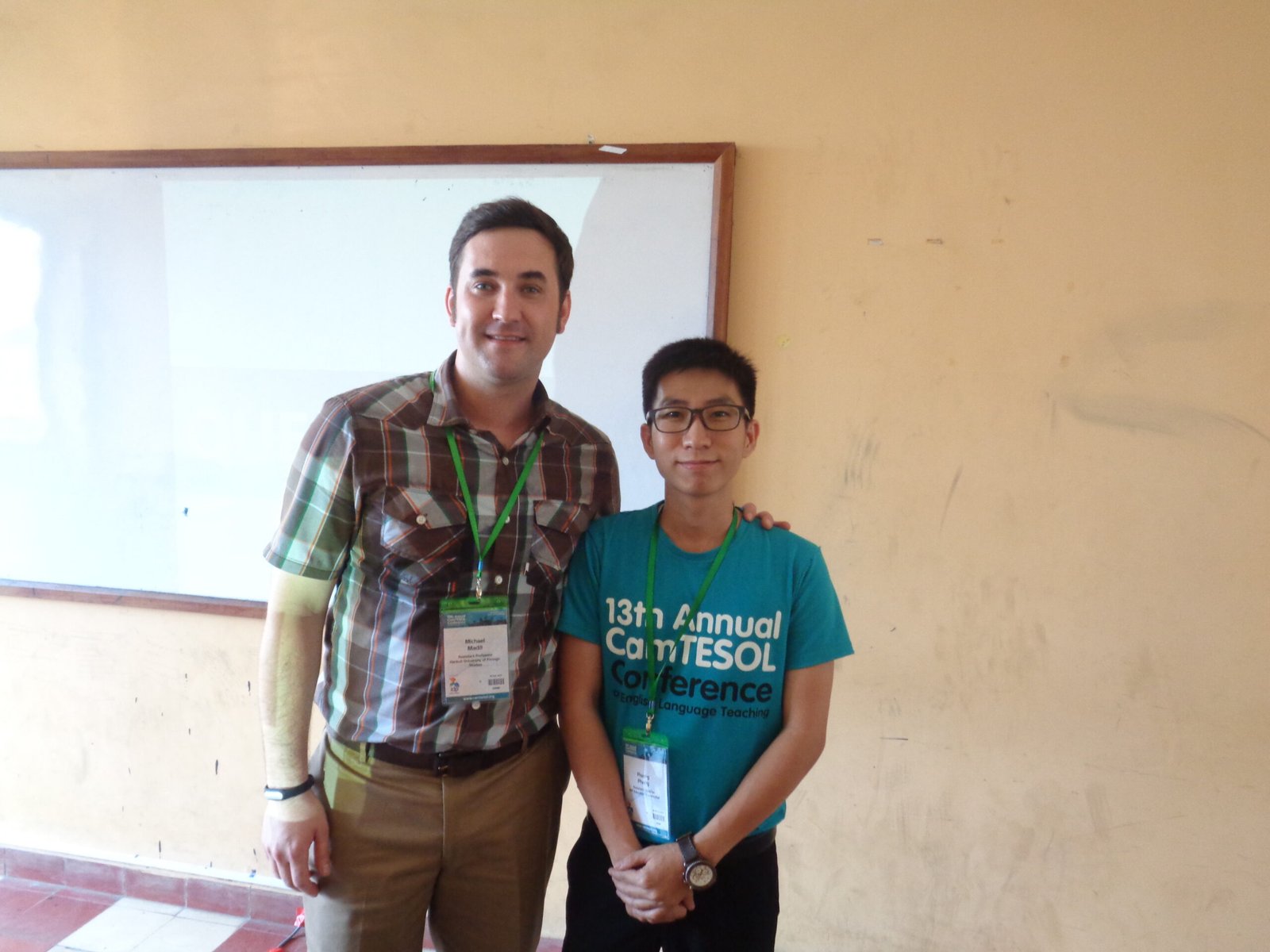
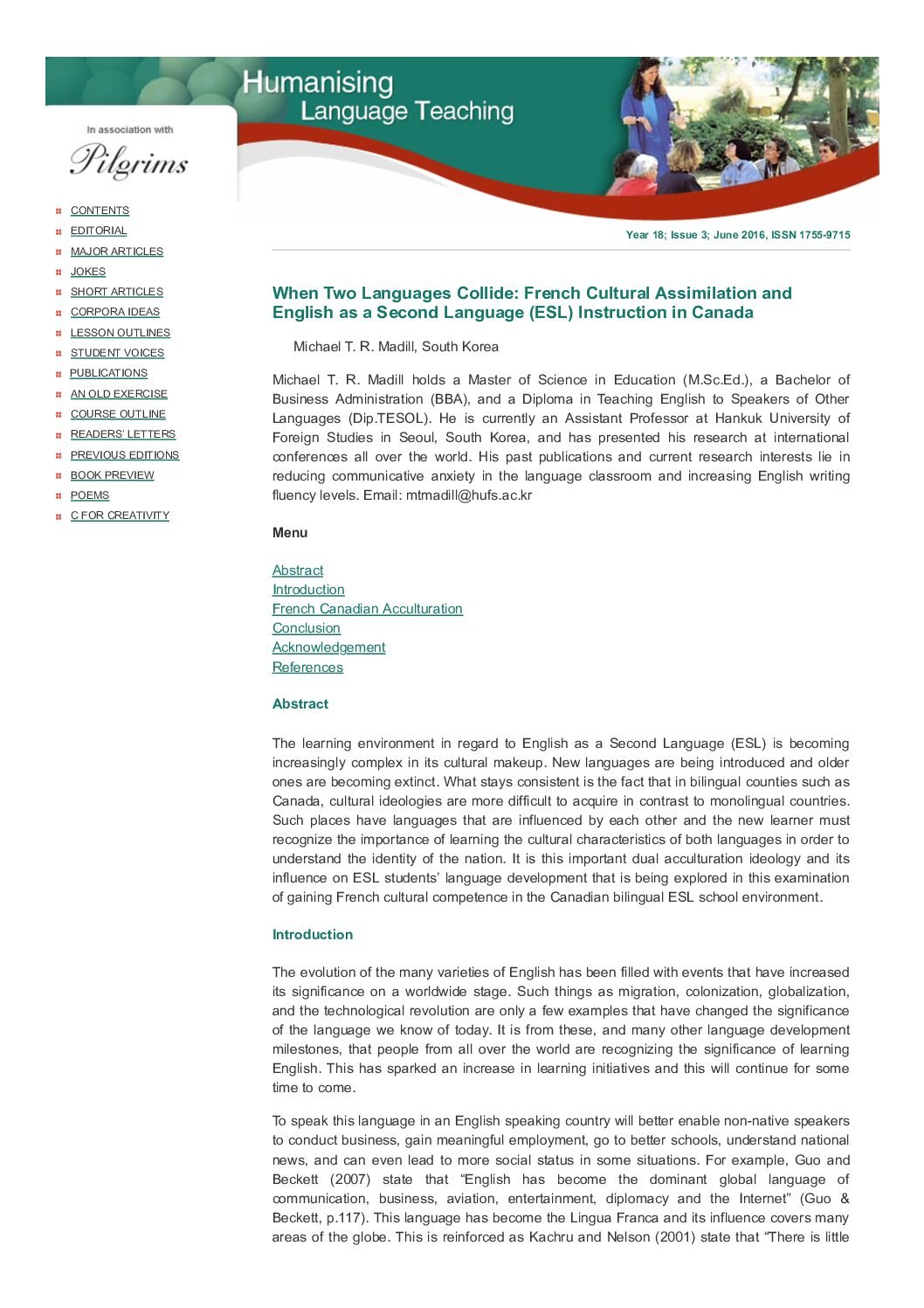
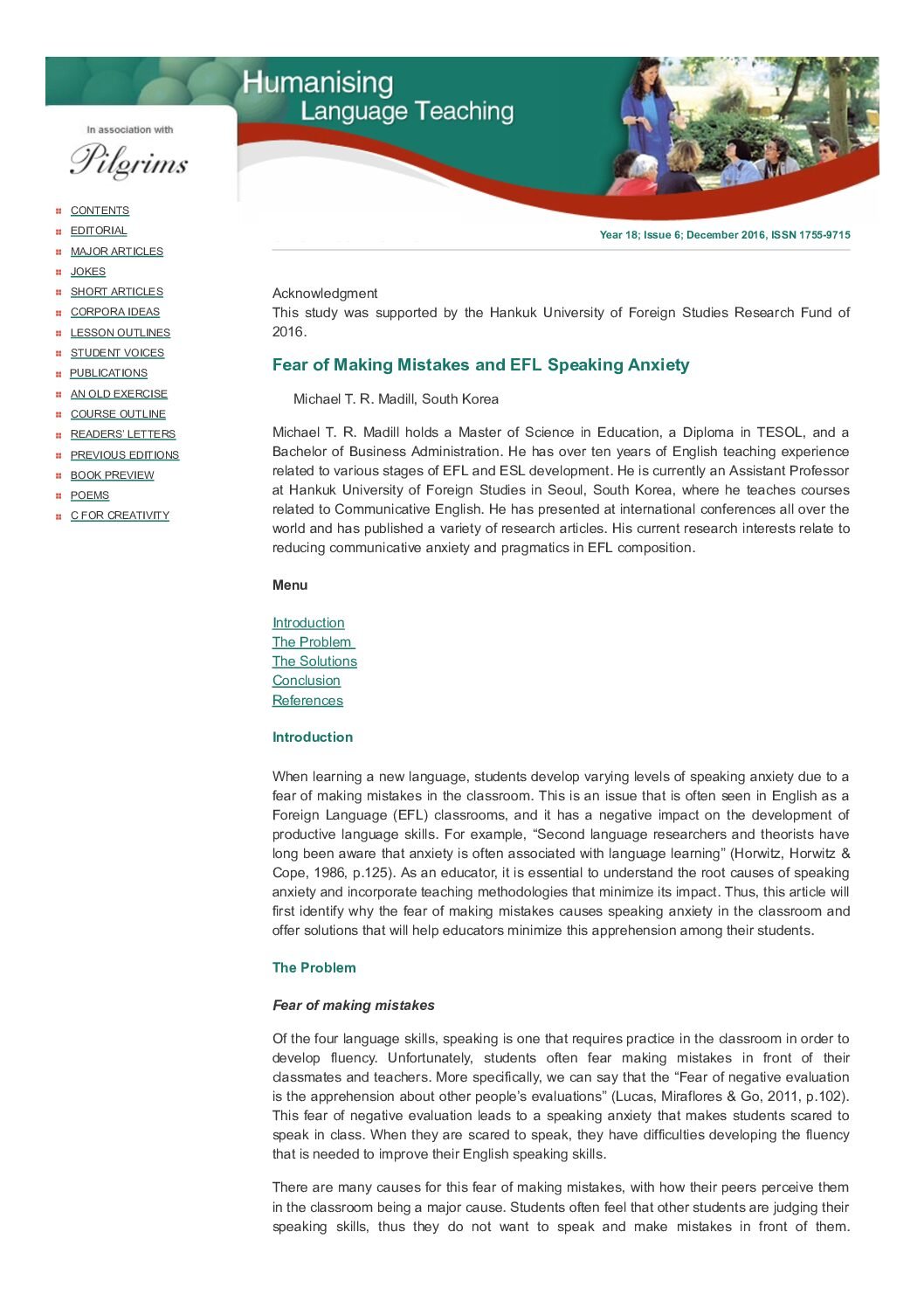
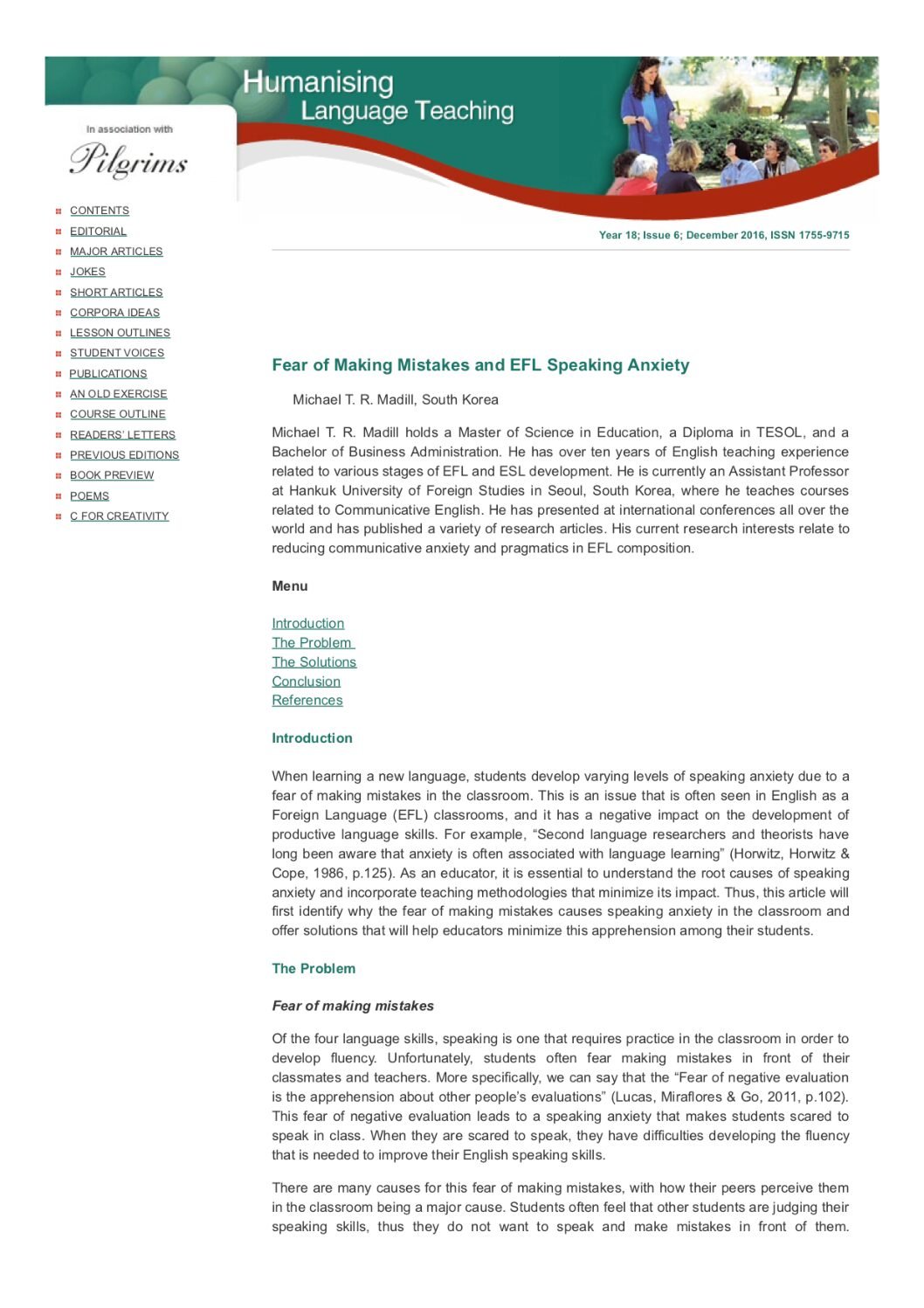
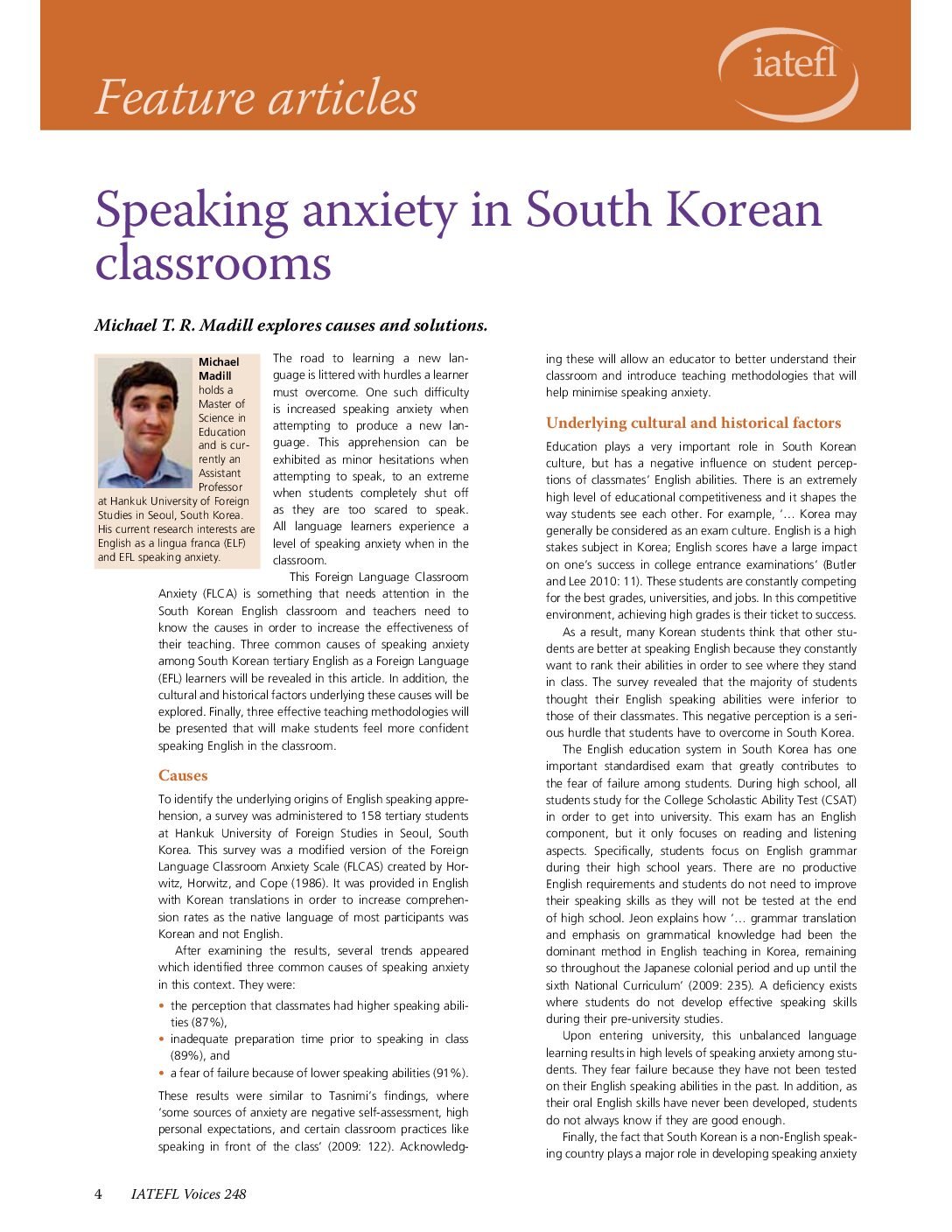
English Speaking Anxiety in South Korean Universities: Root Sources of Apprehension and Practical Resolutions
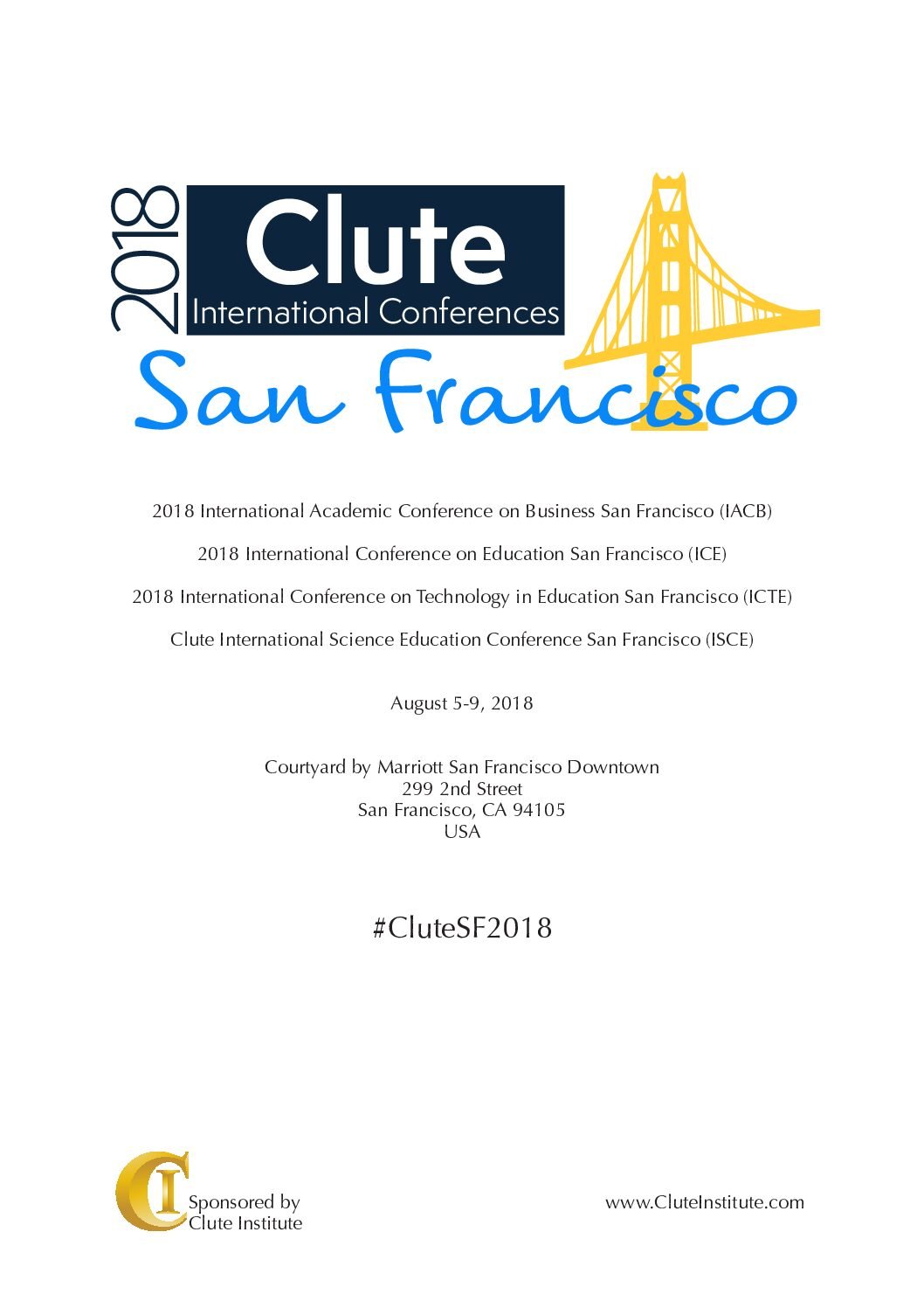
Clute International Education Conference, San Francisco, California, USA · Aug 2018
This conference presentation examined the underlying causes of communicative anxiety among South Korean university students learning English as a foreign language. It explored how fear of mistakes, limited speaking exposure, classroom dynamics, and performance pressure can reduce learner confidence and willingness to communicate.
The presentation also highlighted practical instructional strategies to reduce speaking apprehension, including supportive feedback practices, structured speaking tasks, and classroom design approaches that make students feel safer using English. The goal was to help educators create more confident, communicative, and learner-centered language environments.
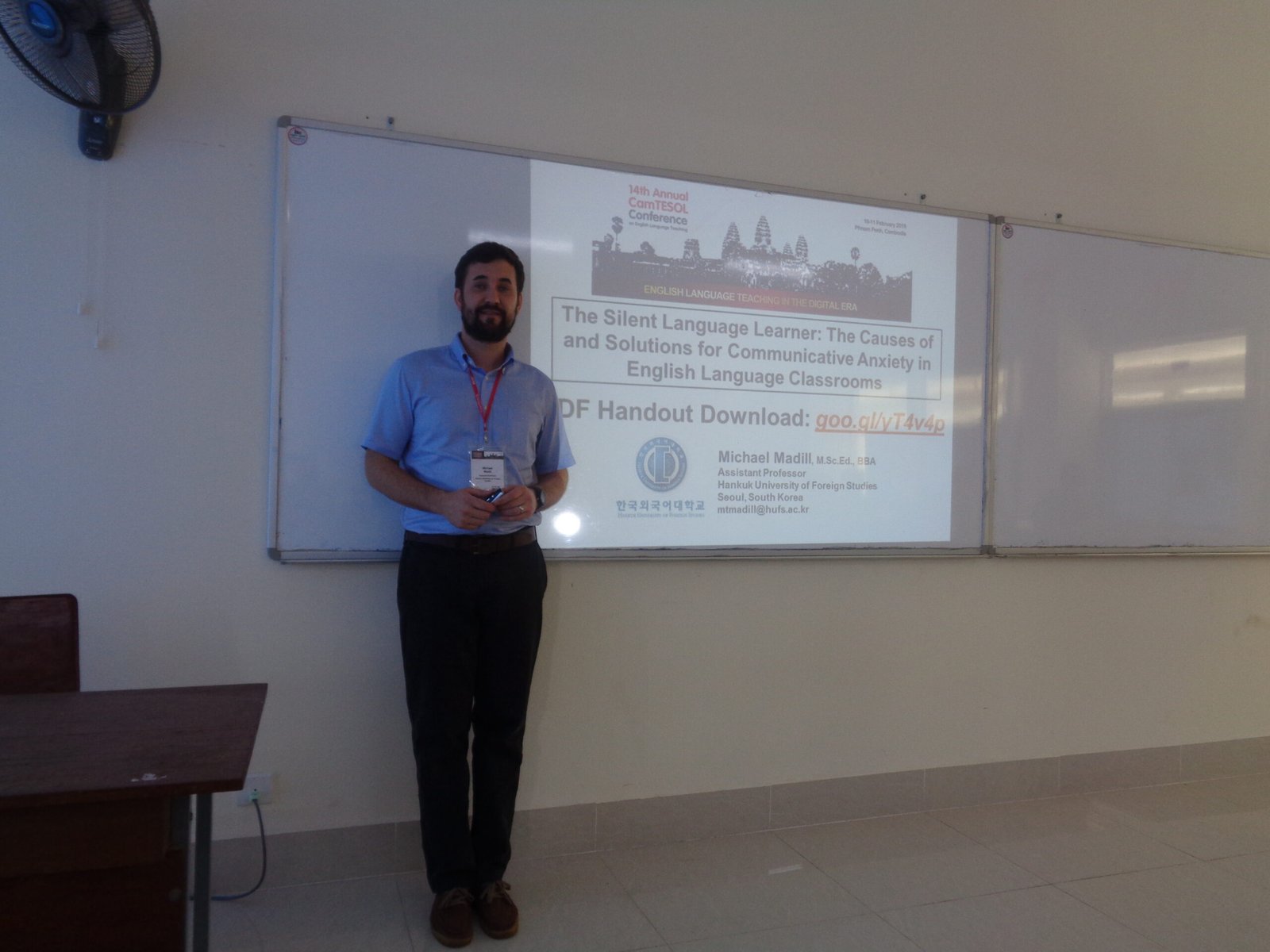
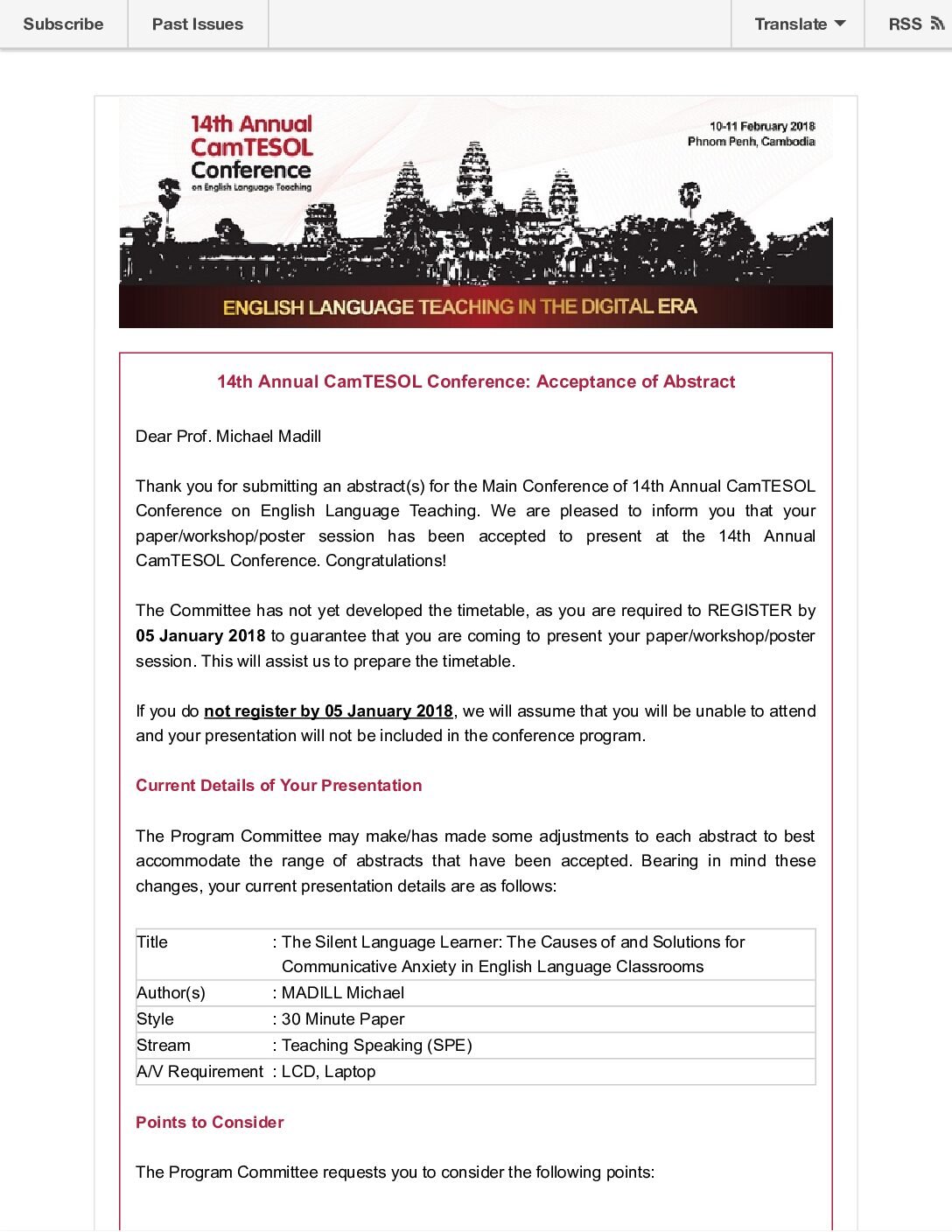
The Silent Language Learner: The Causes of and Solutions for Communicative Anxiety in English Language Classrooms
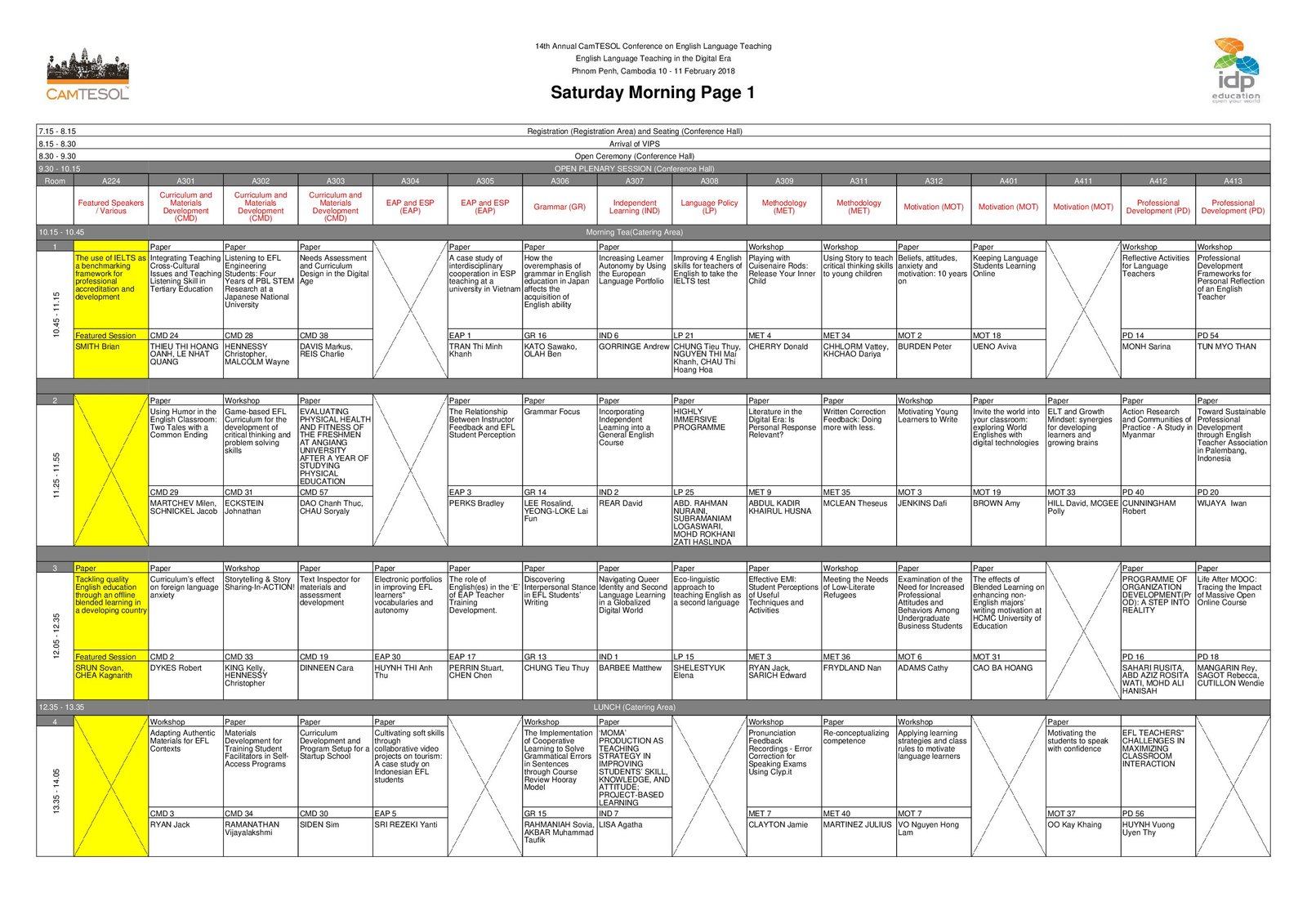
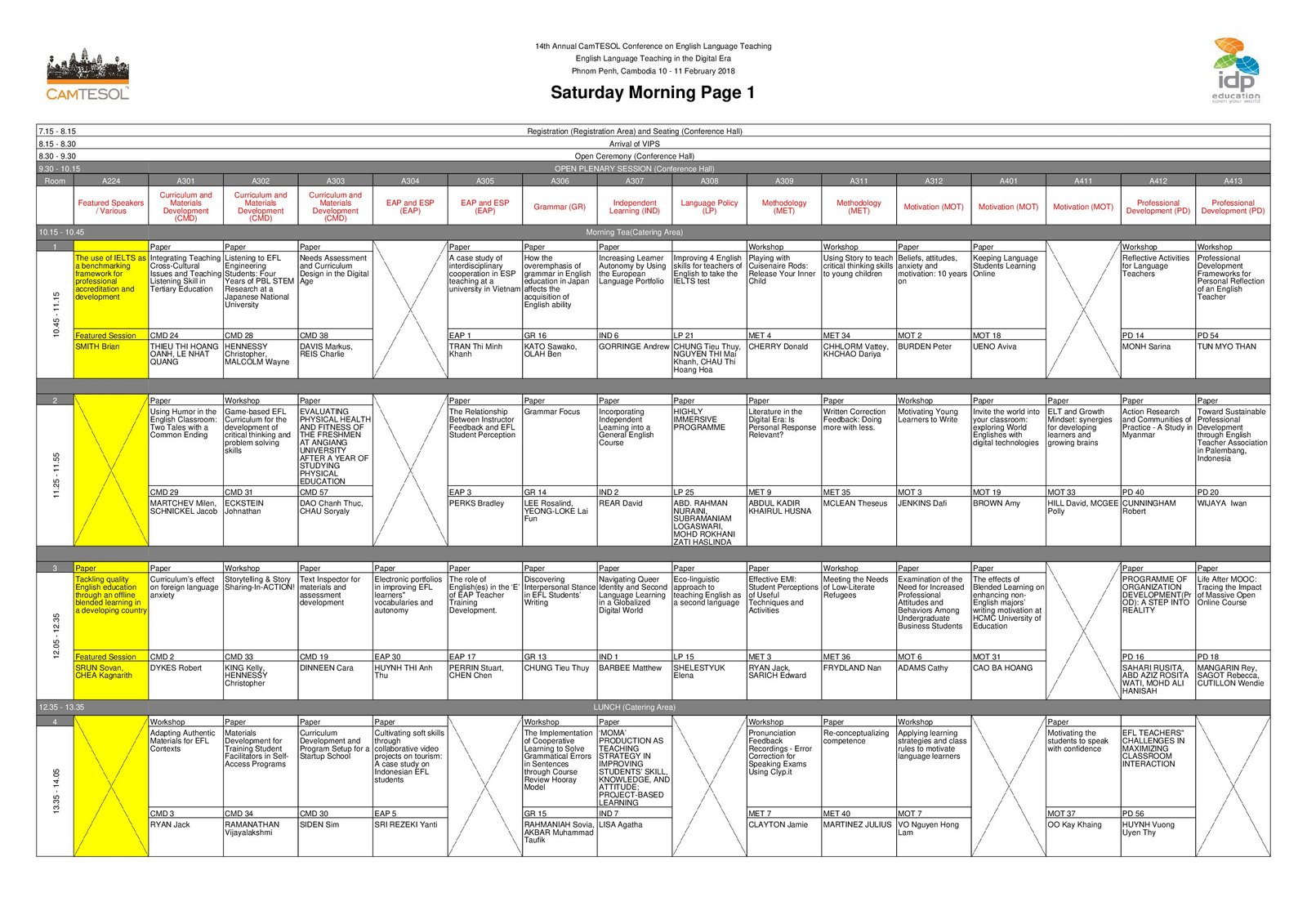
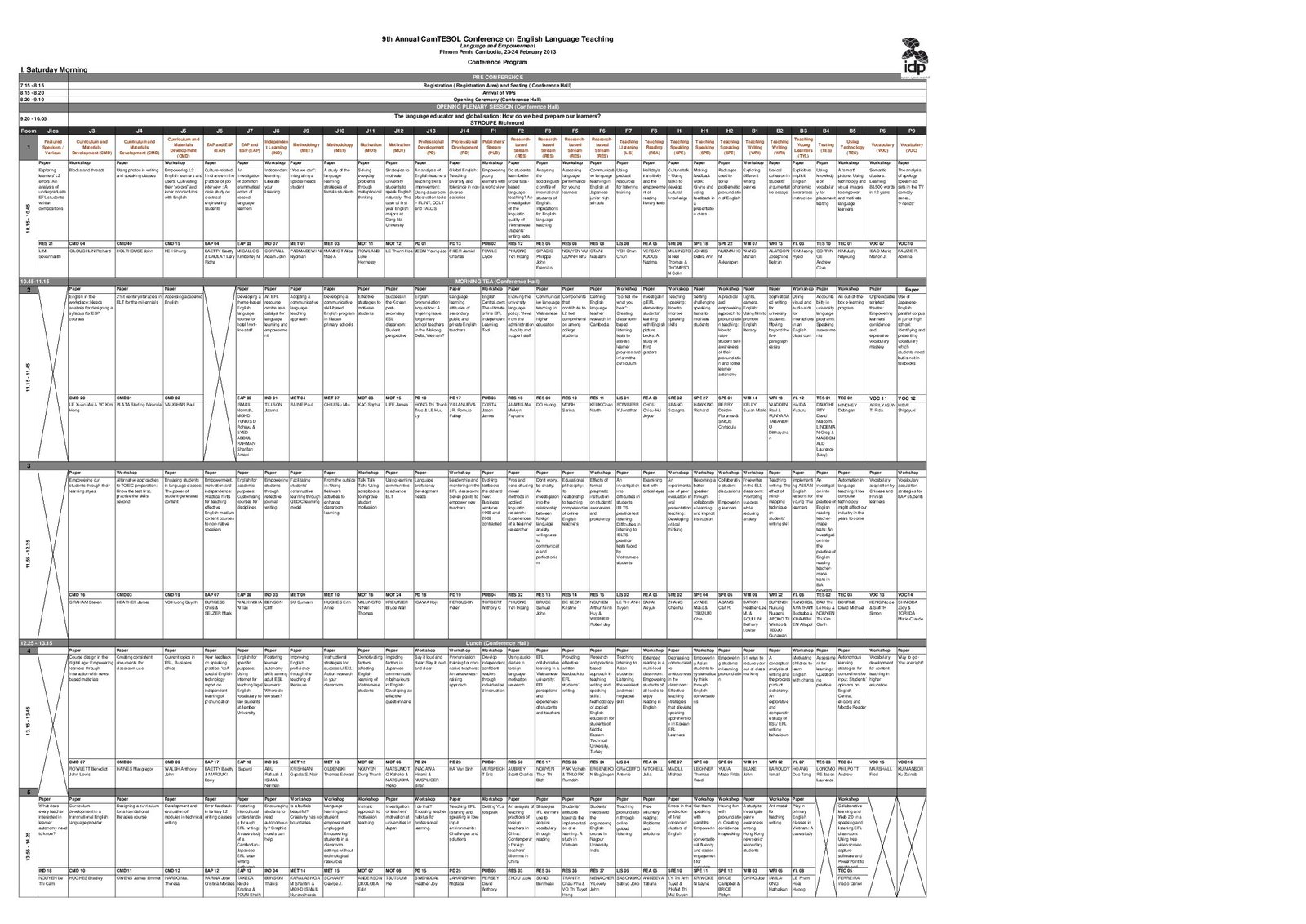
Cambodia TESOL International Conference, Phnom Penh, Cambodia · Feb 2018
This presentation explored why some language learners remain silent or reluctant to participate in English language classrooms, with a focus on the role of communicative anxiety in limiting oral language development. It examined the emotional, social, and instructional factors that contribute to learner hesitation and reduced classroom participation.
The session also presented practical teaching solutions to lower anxiety and encourage more active engagement, including supportive facilitation techniques, confidence-building activities, and classroom practices that normalize risk-taking and gradual speaking development.
Speaking Anxiety in English as a Foreign Language (EFL) Classrooms: Root Causes and Effective Teaching Methodologies
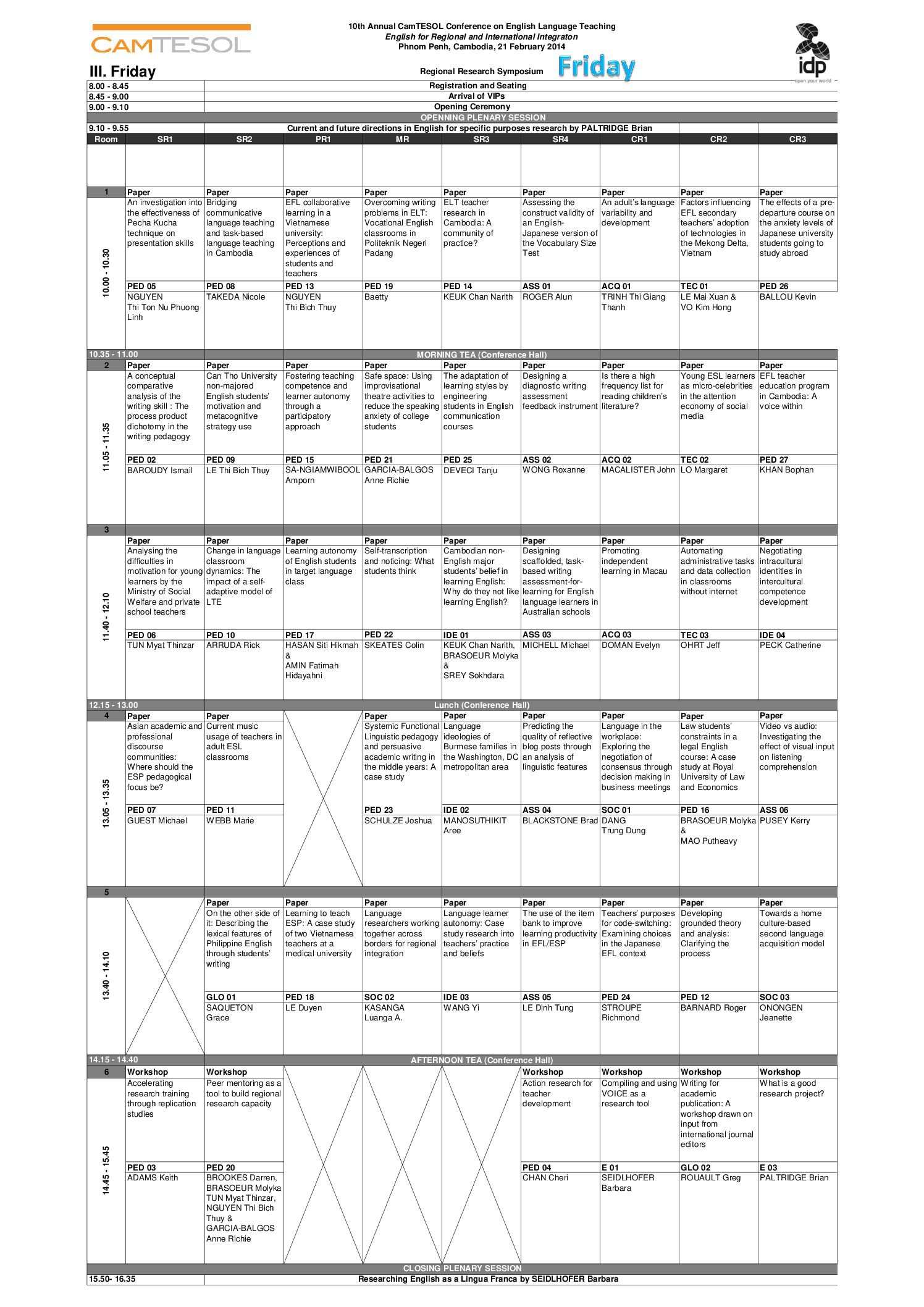
Cambodia TESOL International Conference, Phnom Penh, Cambodia · Feb 2017
This presentation investigated the root causes of speaking anxiety in EFL classrooms and the ways it interferes with learner confidence, participation, and language development. It focused on common triggers such as fear of negative evaluation, error sensitivity, lack of speaking practice, and classroom pressure.
The presentation also shared effective teaching methodologies for reducing anxiety, improving learner comfort, and strengthening oral participation. Emphasis was placed on instructional practices that build confidence while supporting meaningful language use in the classroom.
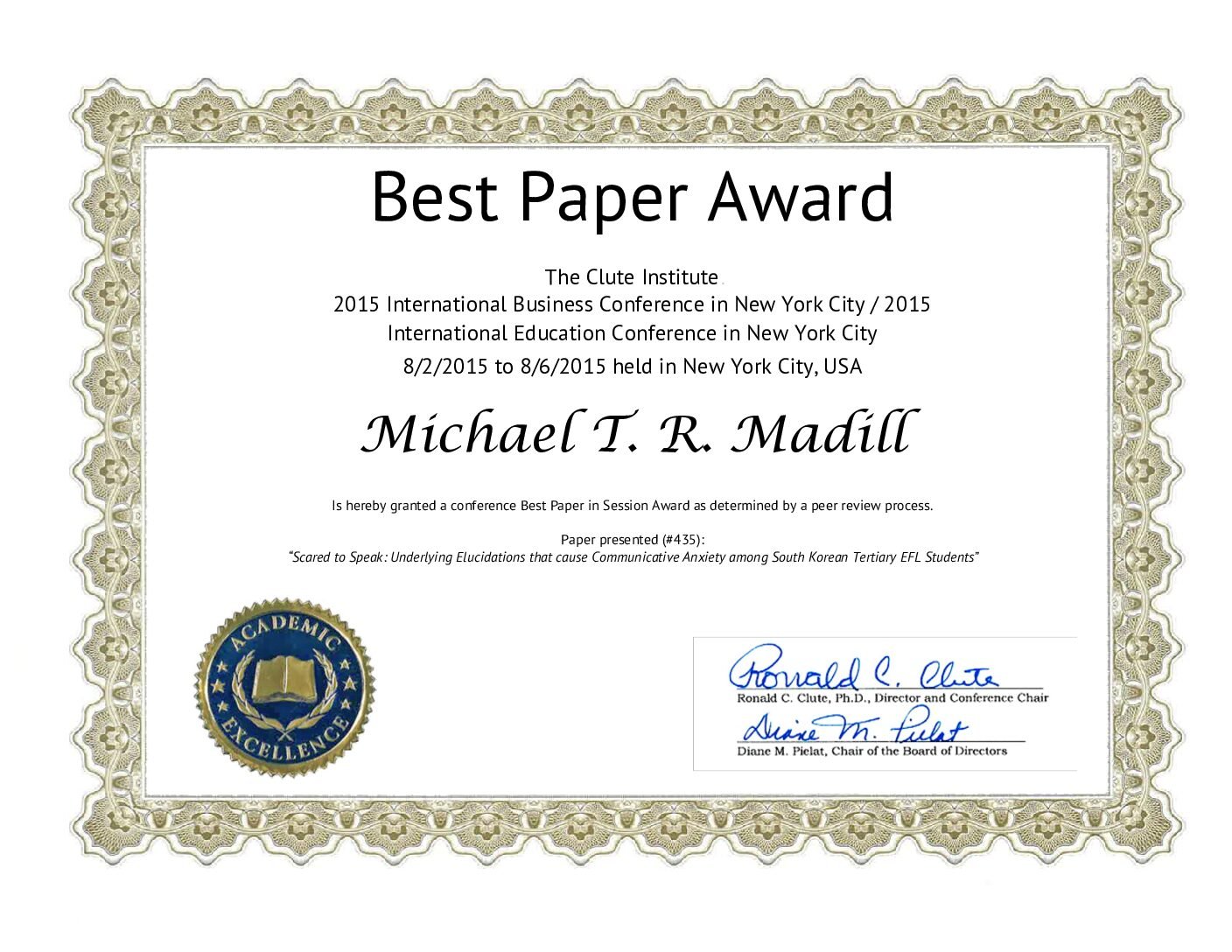
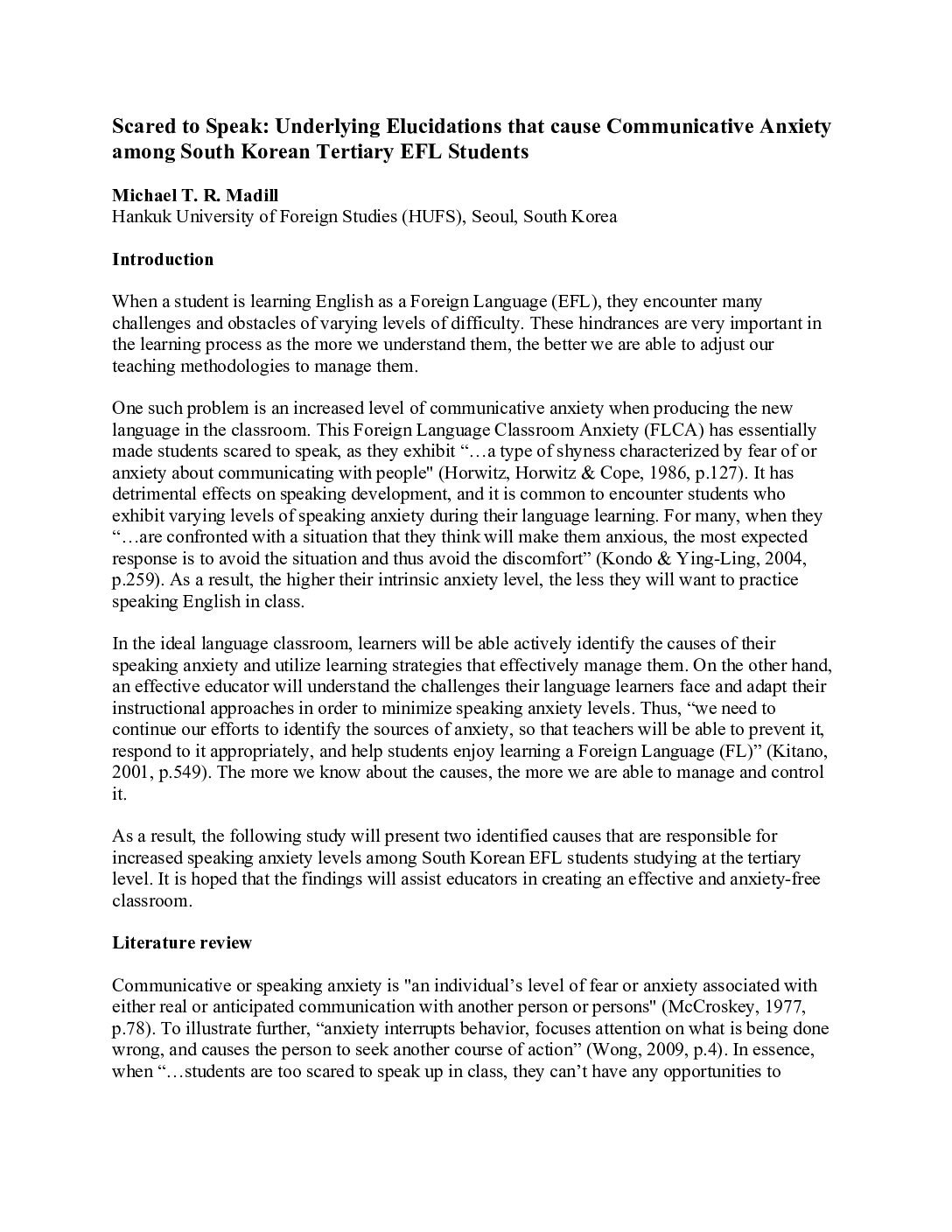
Scared to Speak: Underlying Elucidations that cause Communicative Anxiety among South Korean Tertiary EFL Students
Clute International Education Conference, New York, New York, USA · Aug 2015
This presentation examined the underlying causes of communicative anxiety among South Korean university-level EFL learners and how that anxiety affects speaking performance, classroom interaction, and language confidence. It explored the psychological and contextual influences that contribute to apprehension when students are asked to communicate in English.
The session also offered instructional implications for educators seeking to reduce anxiety and support more confident language use. By identifying the root causes of speaking apprehension, the presentation aimed to help teachers design more supportive, effective, and participation-friendly learning environments.
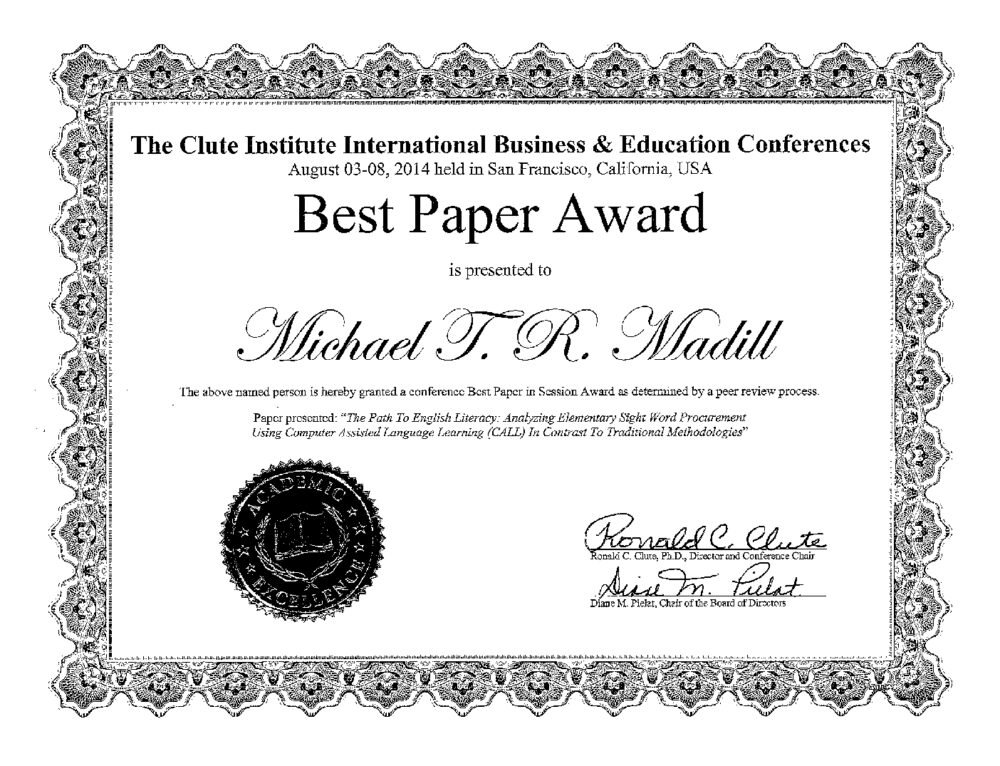
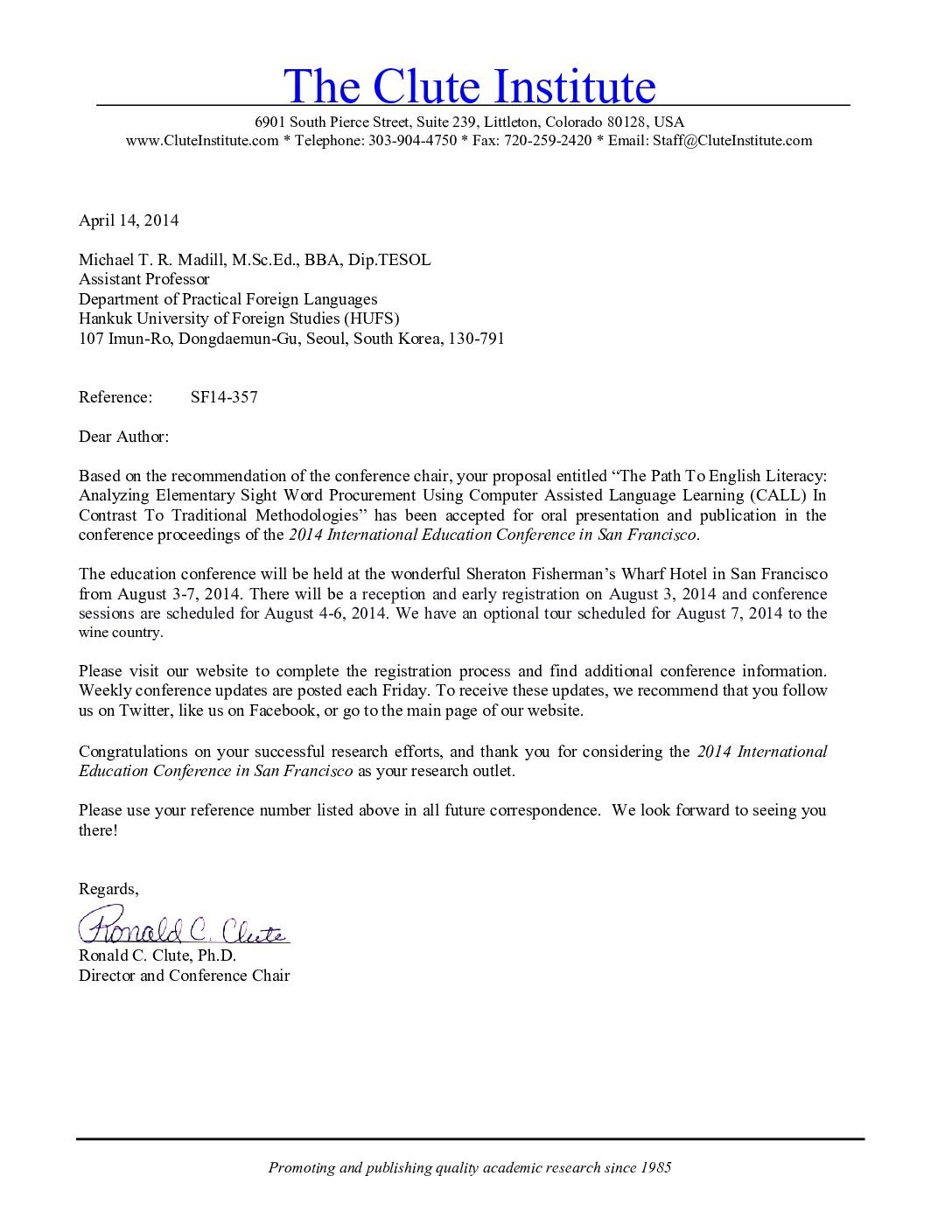
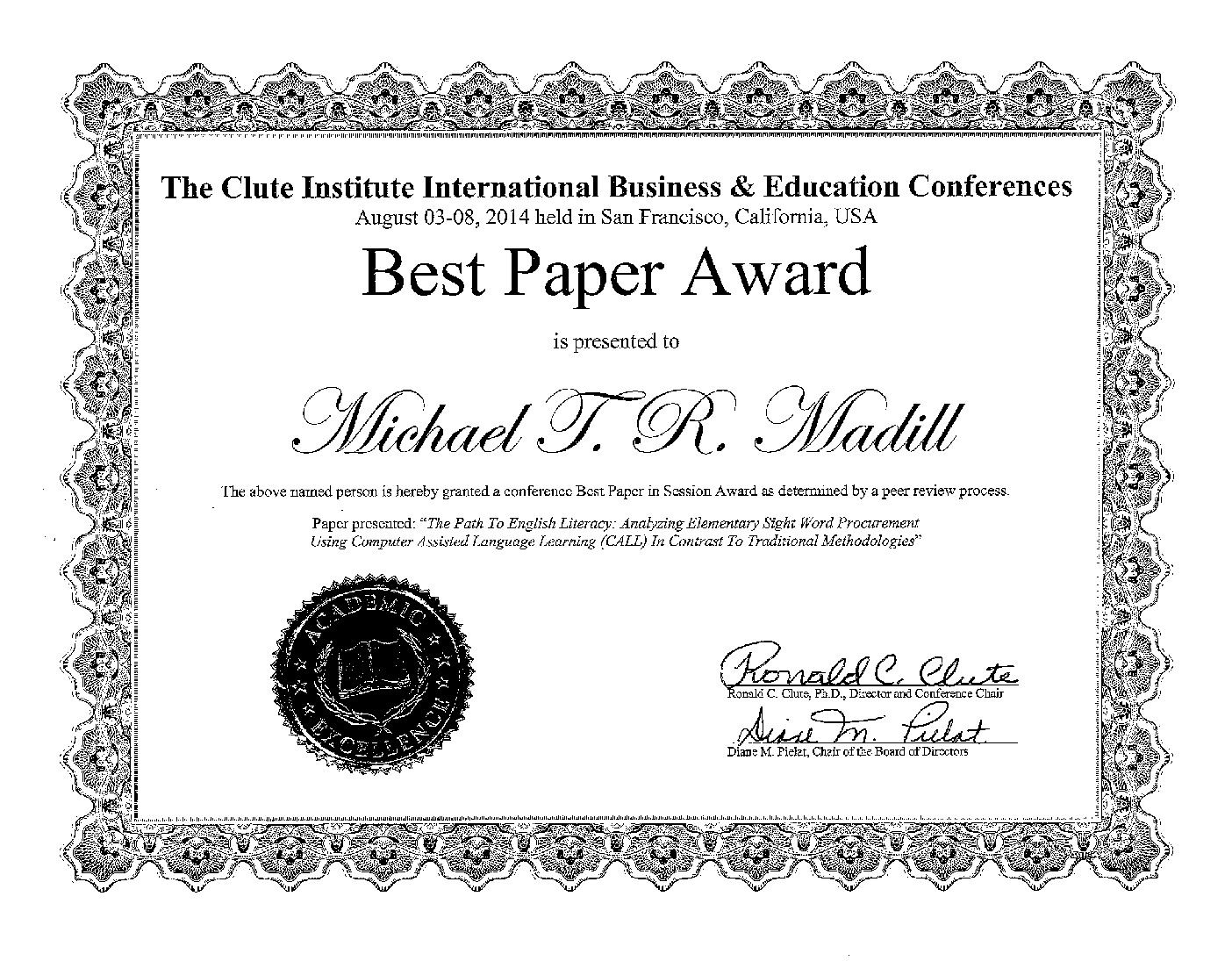
The Path to English Literacy: Analyzing Elementary Sight Word Procurement using Computer Assisted Language Learning (CALL) in contrast to Traditional Methodologies
Clute International Education Conference, San Francisco, California, USA · Aug 2014
This conference presentation compared the effectiveness of Computer Assisted Language Learning (CALL) and traditional teacher-led instruction in supporting elementary sight word acquisition in English as a foreign language contexts. It explored how different instructional approaches influence learner comprehension, acquisition, and motivation.
Findings suggested that both methods supported literacy development, while CALL demonstrated stronger associations with learner engagement and motivation. The presentation contributed to discussions on technology integration, early literacy, and evidence-based language instruction for young learners.
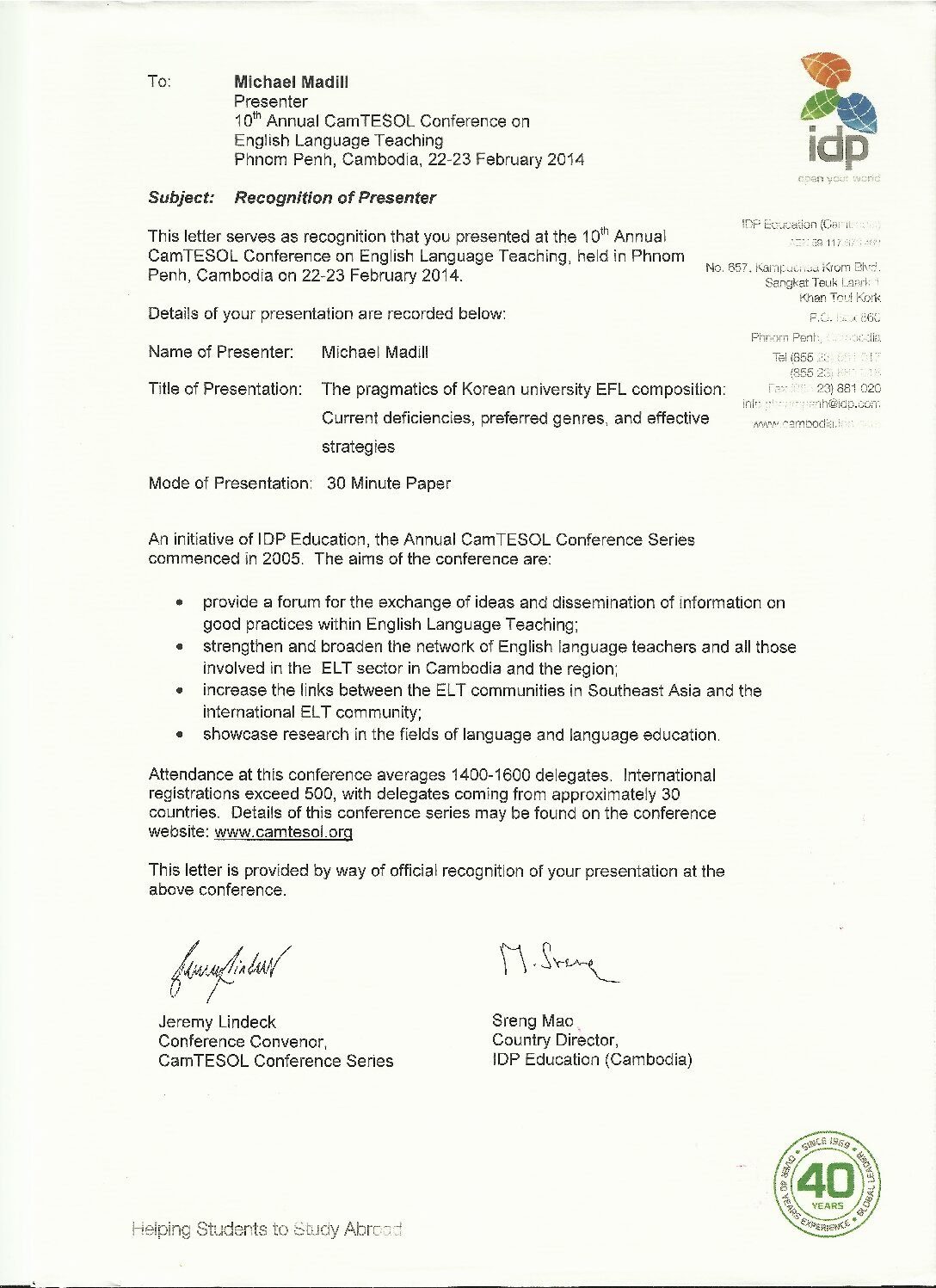
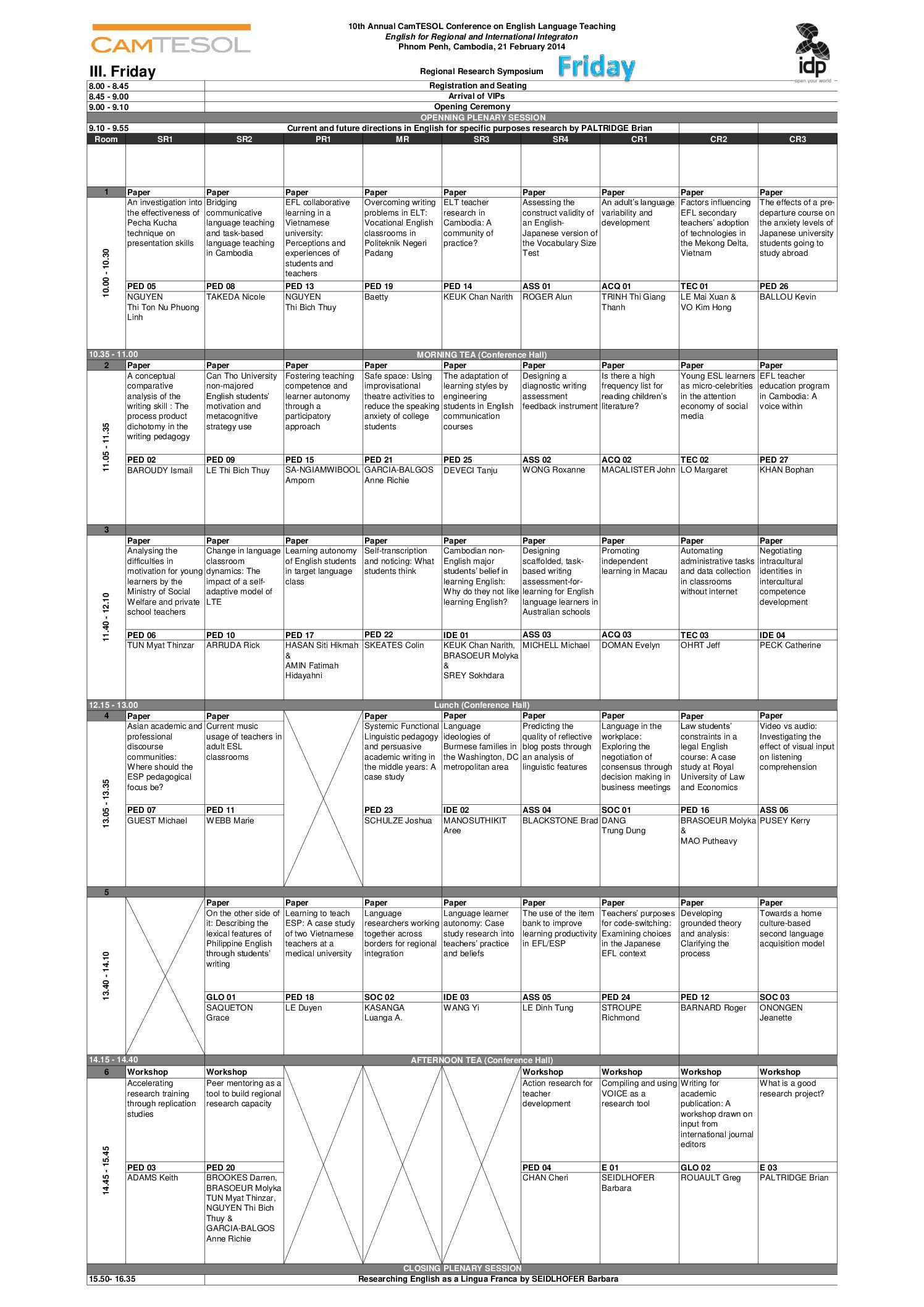
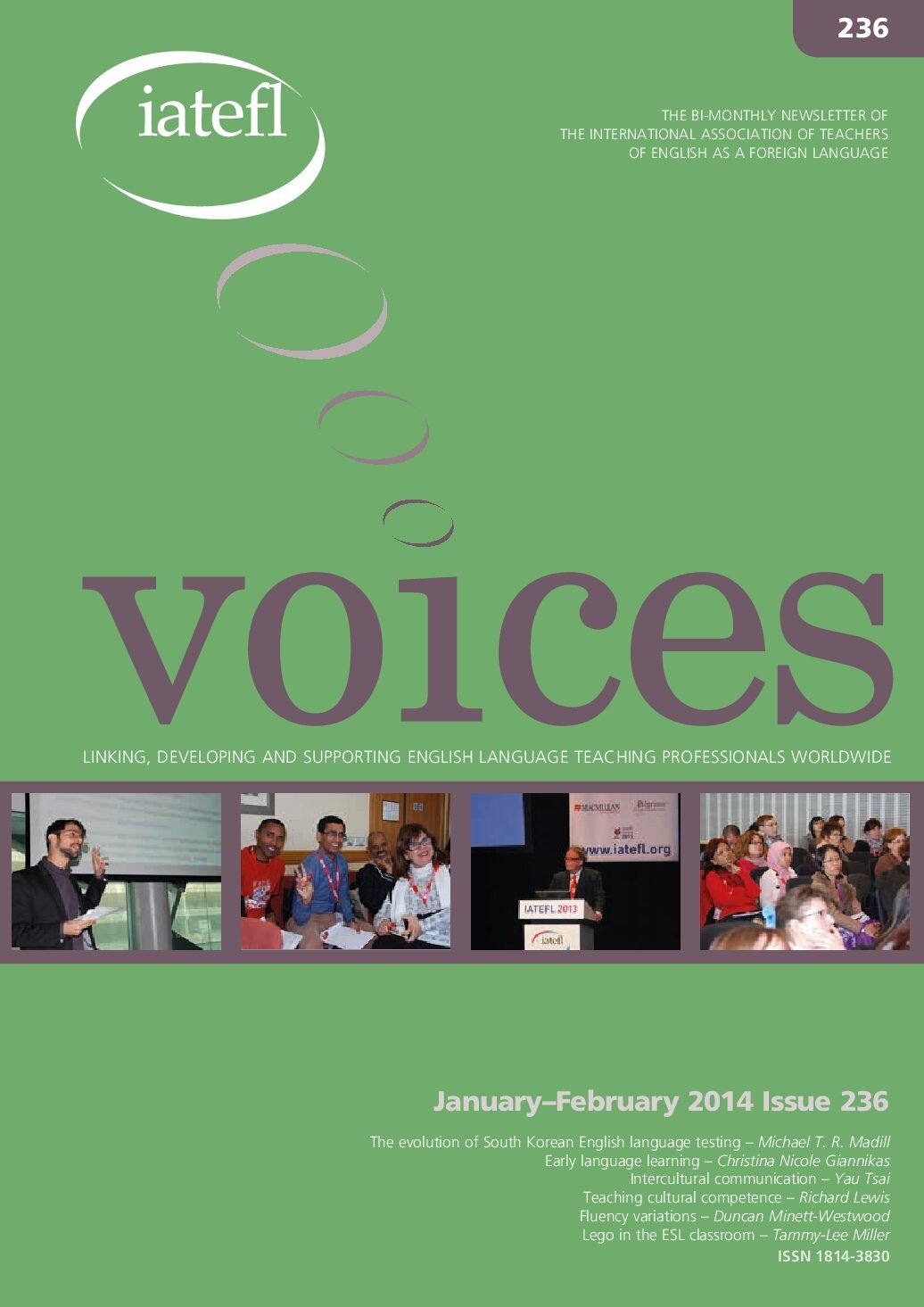
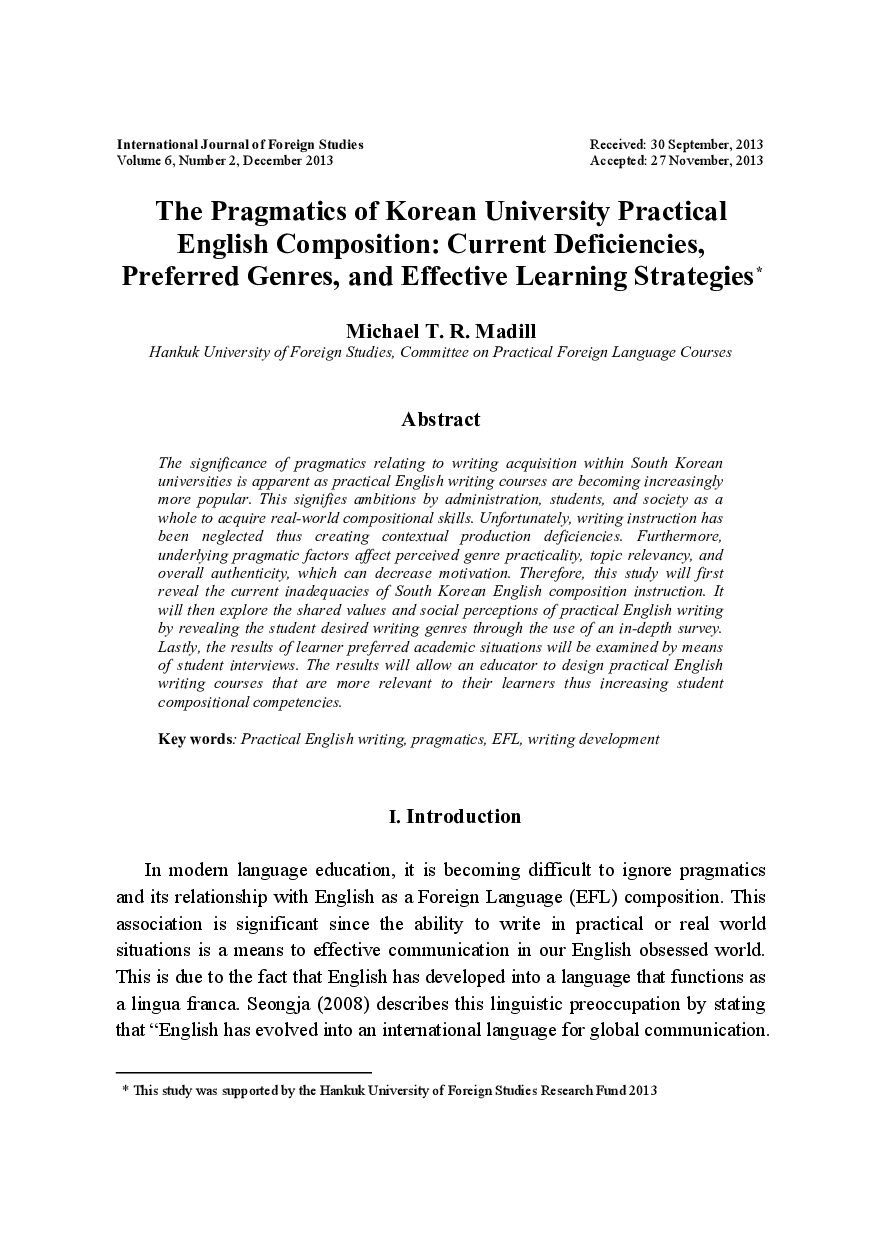
The Pragmatics of Korean University Practical English Composition: Current Deficiencies, Preferred Genres, and Effective Learning Strategies
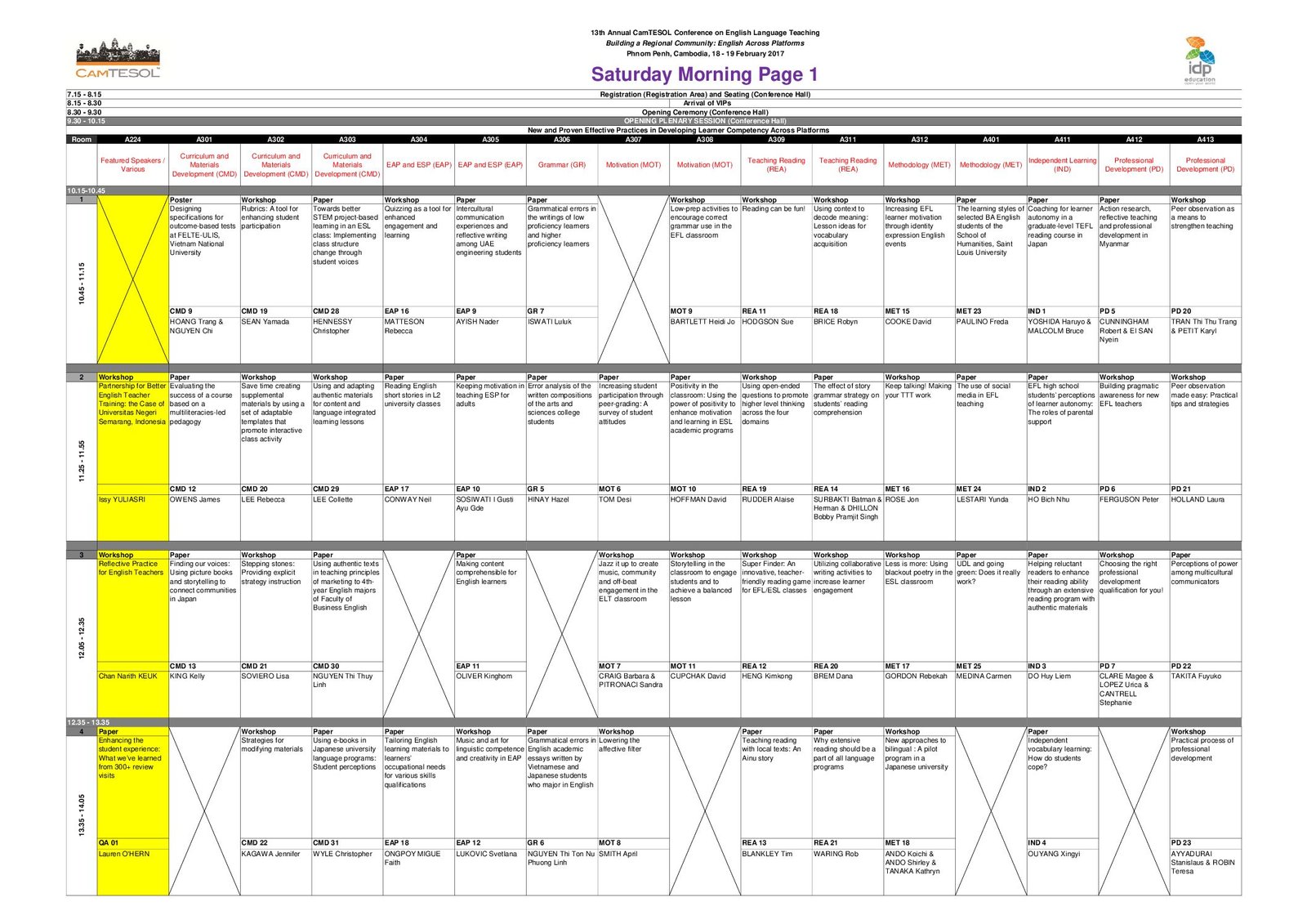
Cambodia TESOL International Conference, Phnom Penh, Cambodia · Feb 2014
This presentation explored the teaching of practical English writing in Korean university contexts, focusing on current instructional gaps, learner needs, and the importance of genre relevance in writing development. It examined how writing courses can better align with real-world communication goals and student expectations.
The session also discussed preferred genres, learner perceptions, and effective strategies for improving motivation, authenticity, and practical writing performance. The goal was to support more relevant and learner-centered approaches to English composition instruction.
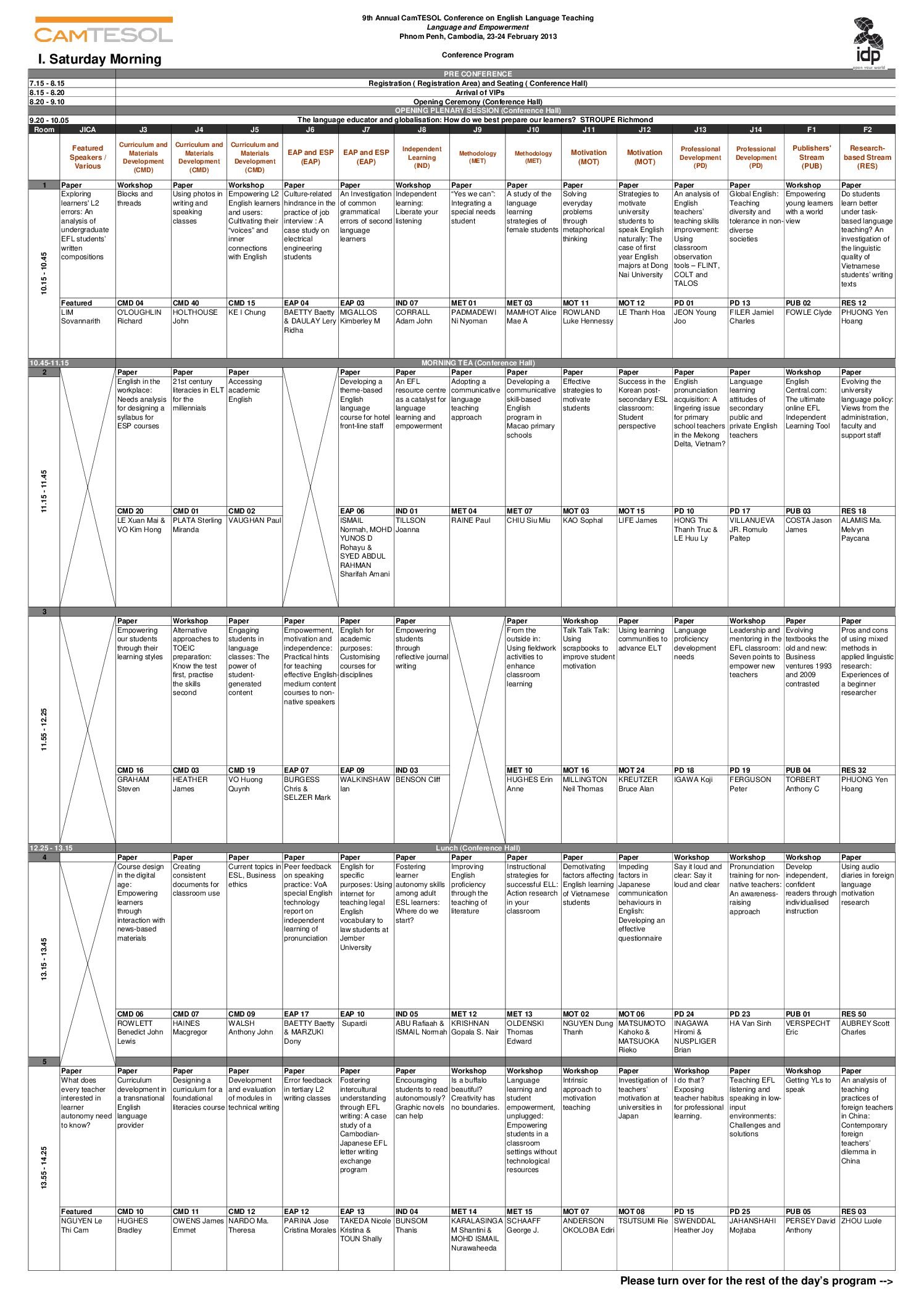
Decreasing Communicative Anxiousness in the Classroom: Effective Teaching Strategies that Alleviate Speaking Apprehension among Elementary Korean EFL Learners
Cambodia TESOL International Conference, Phnom Penh, Cambodia · Feb 2013
This presentation focused on communicative anxiety among elementary Korean EFL learners and the instructional challenges it creates for language development, confidence, and classroom participation. It examined how early speaking apprehension can affect willingness to communicate and long-term oral skill growth.
The presentation also outlined practical teaching strategies to reduce anxiety in young learners, including supportive classroom routines, age-appropriate speaking tasks, and feedback practices that encourage participation without increasing fear of mistakes.
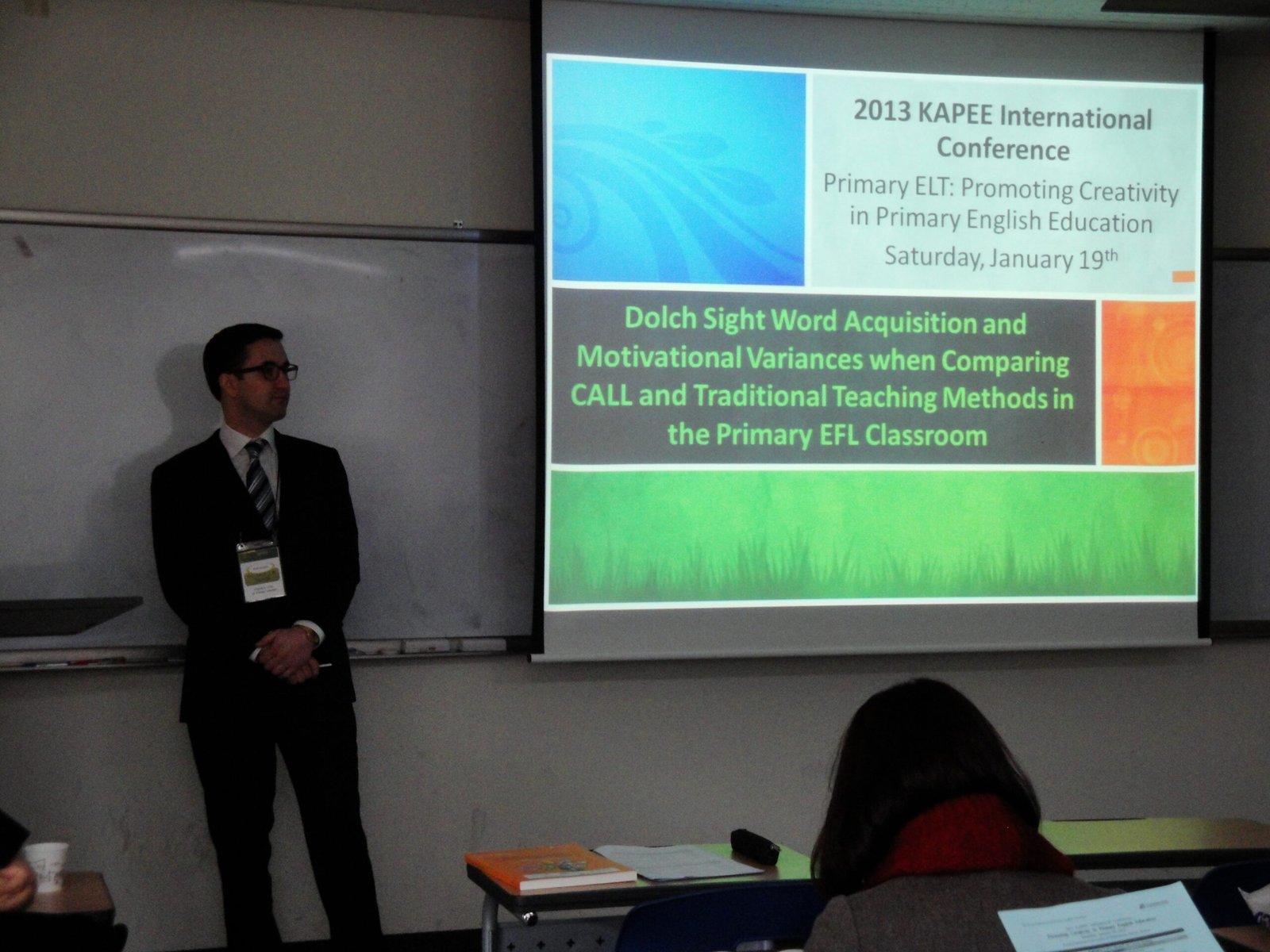
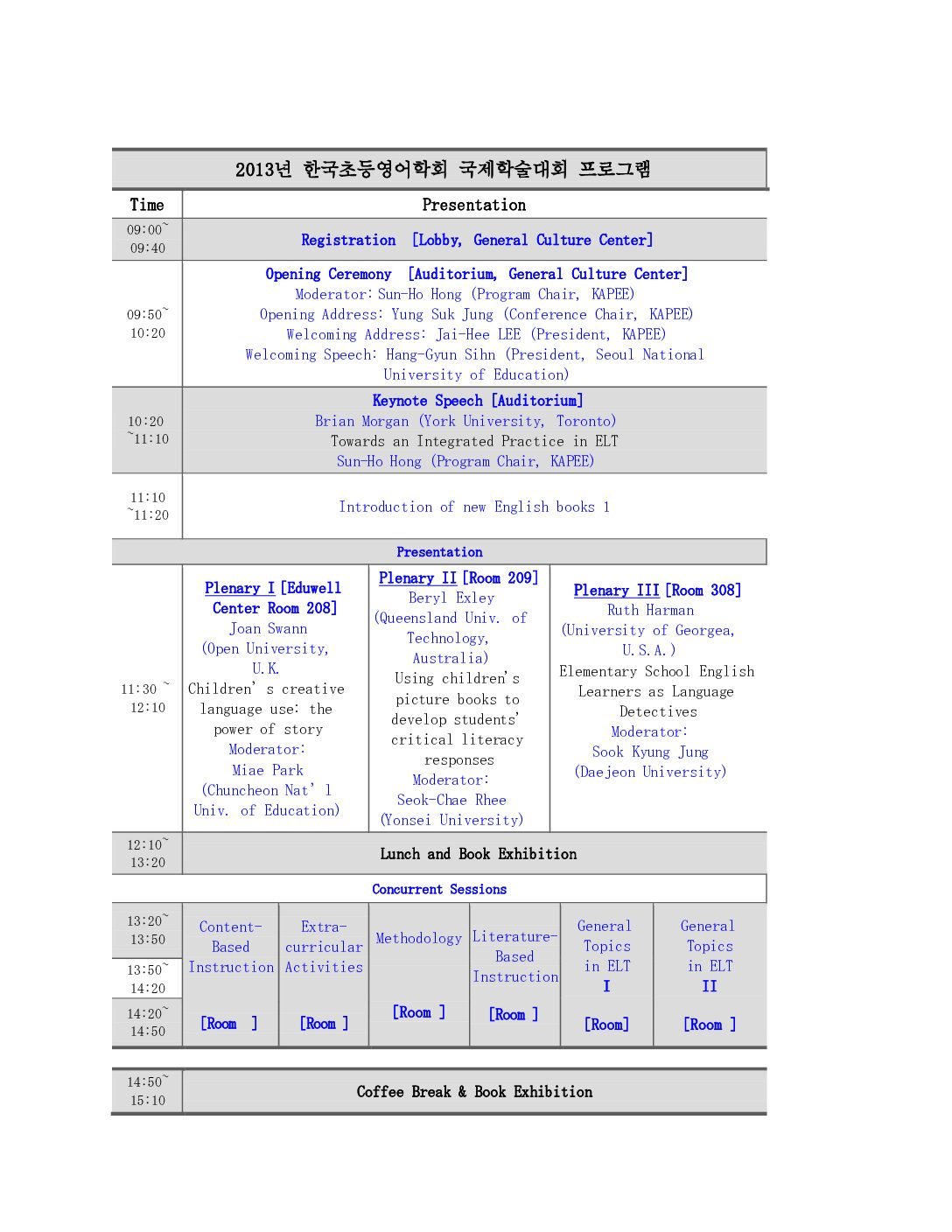
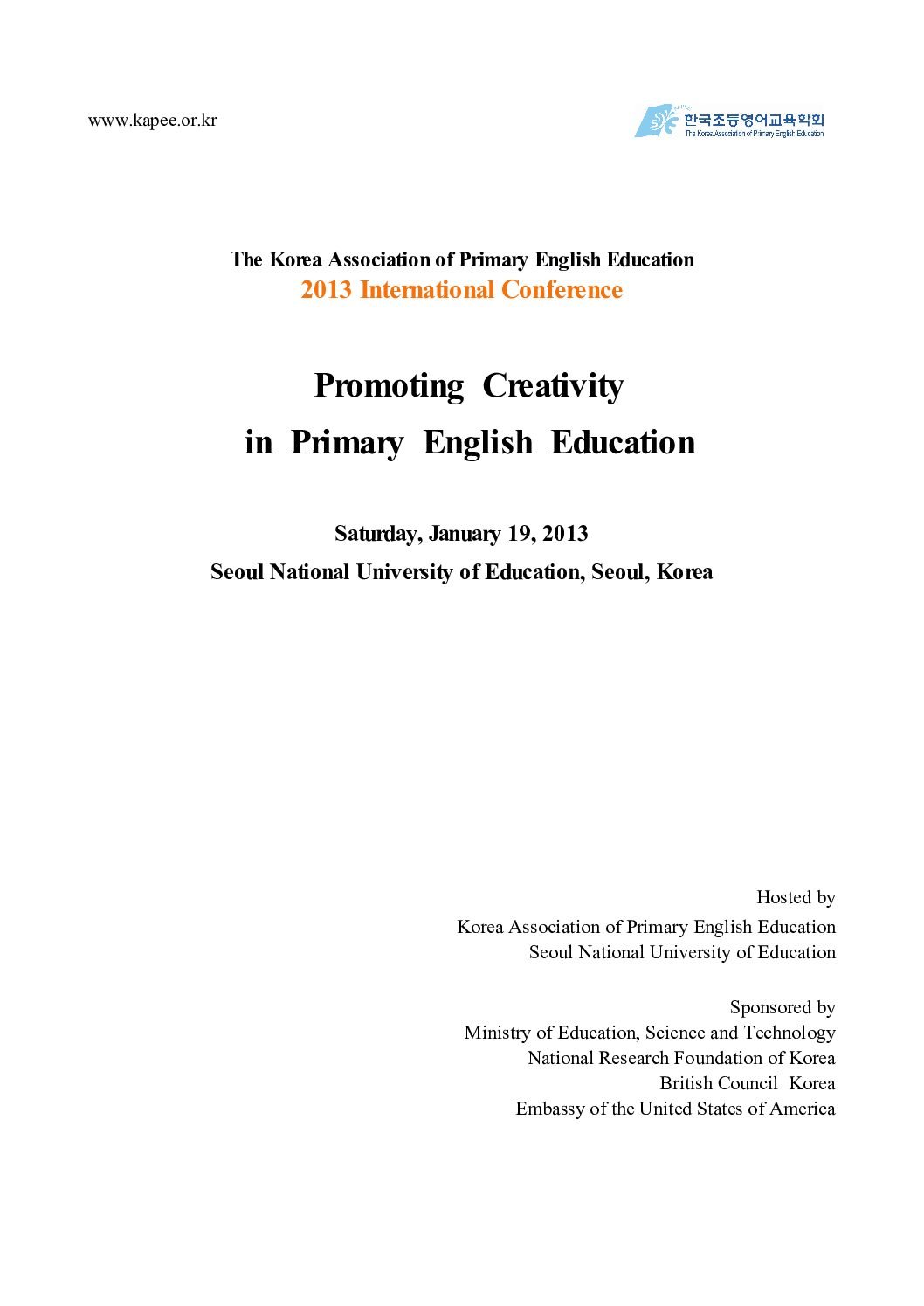
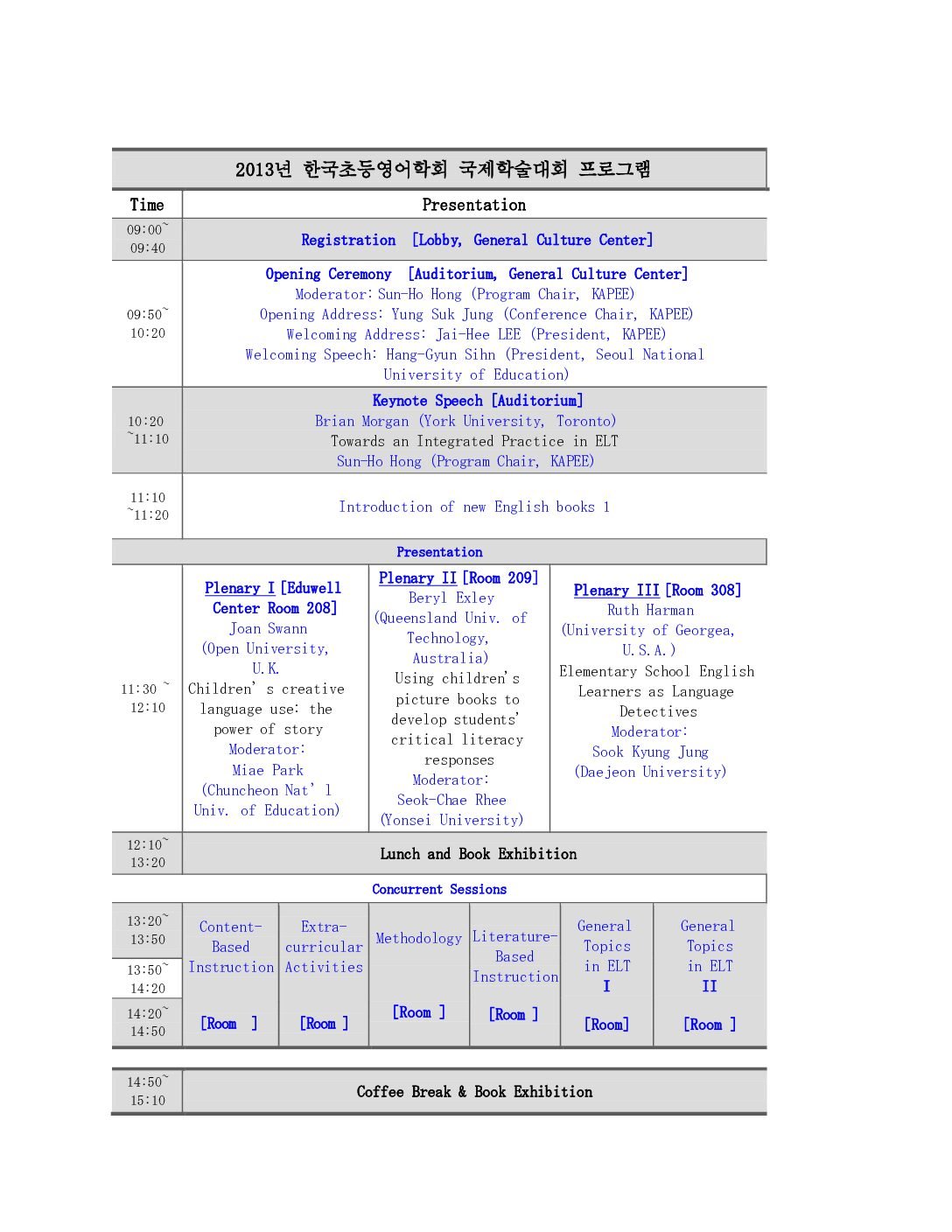
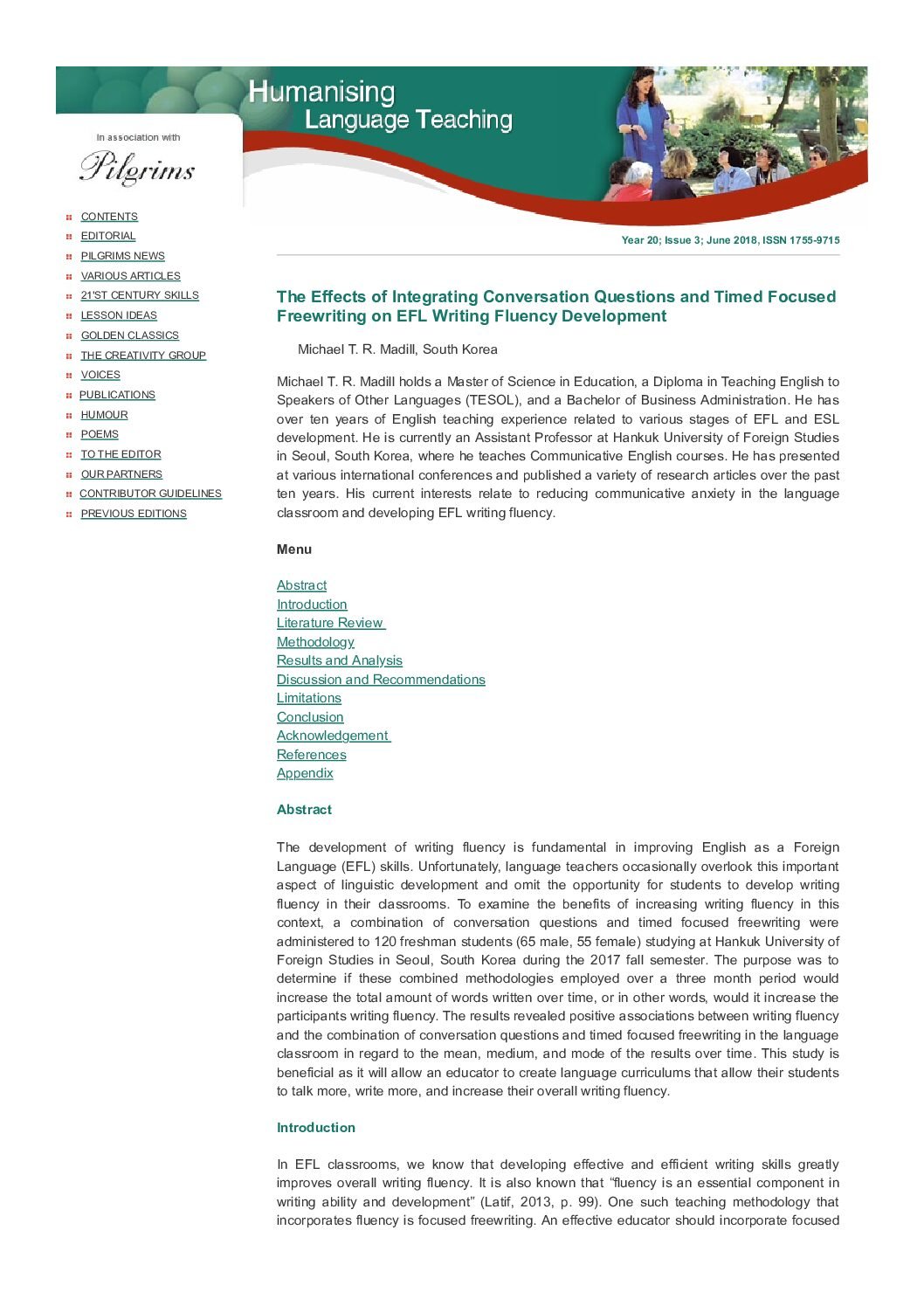
Dolch Sight Word Acquisition and Motivational Variances when Comparing CALL and Traditional Teaching Methods in the Primary EFL Classroom
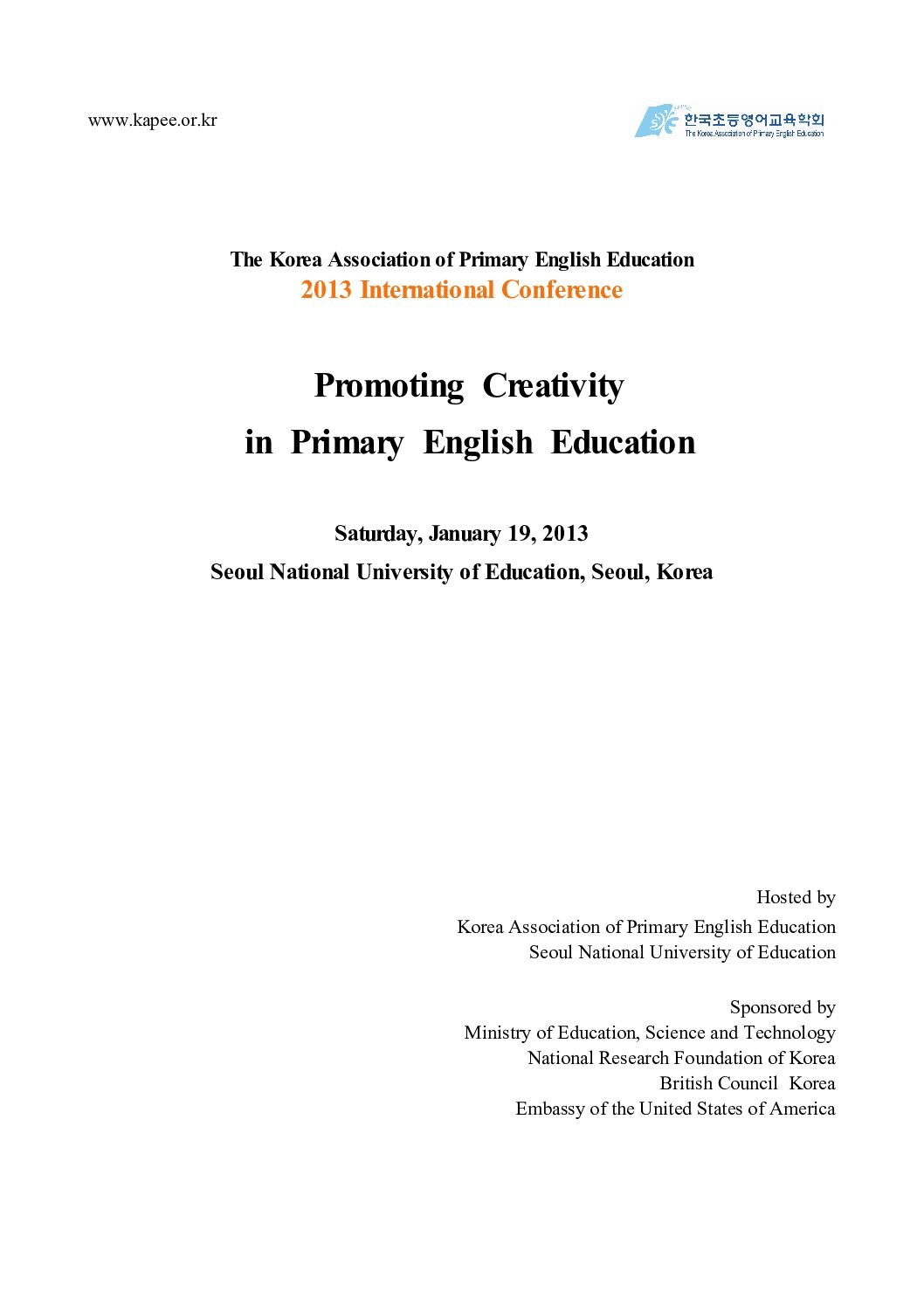
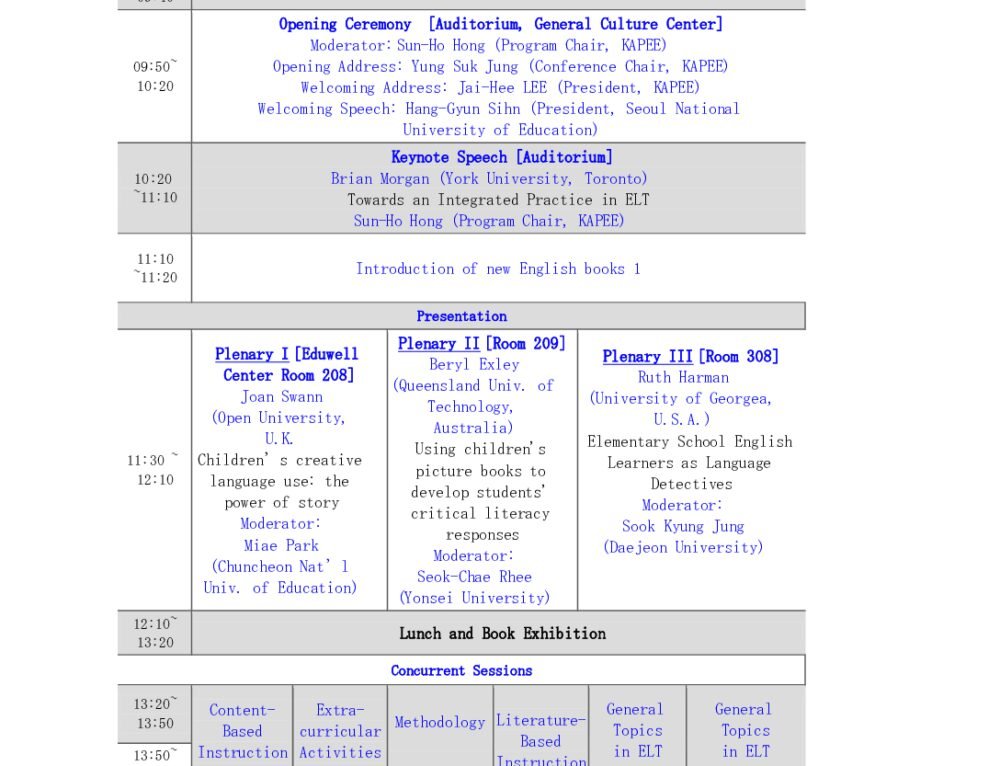
Korea Association of Primary English Education International Conference, Seoul, South Korea · Jan 2013
This presentation examined how Computer Assisted Language Learning (CALL) and traditional instruction influenced Dolch sight word acquisition among primary EFL learners. It focused on both learning outcomes and motivational differences between technology-supported and teacher-led instructional approaches.
The findings showed that both approaches supported word acquisition, while CALL demonstrated stronger links to student motivation and engagement. The presentation contributed to conversations on literacy development, instructional design, and the effective use of educational technology in primary language classrooms.
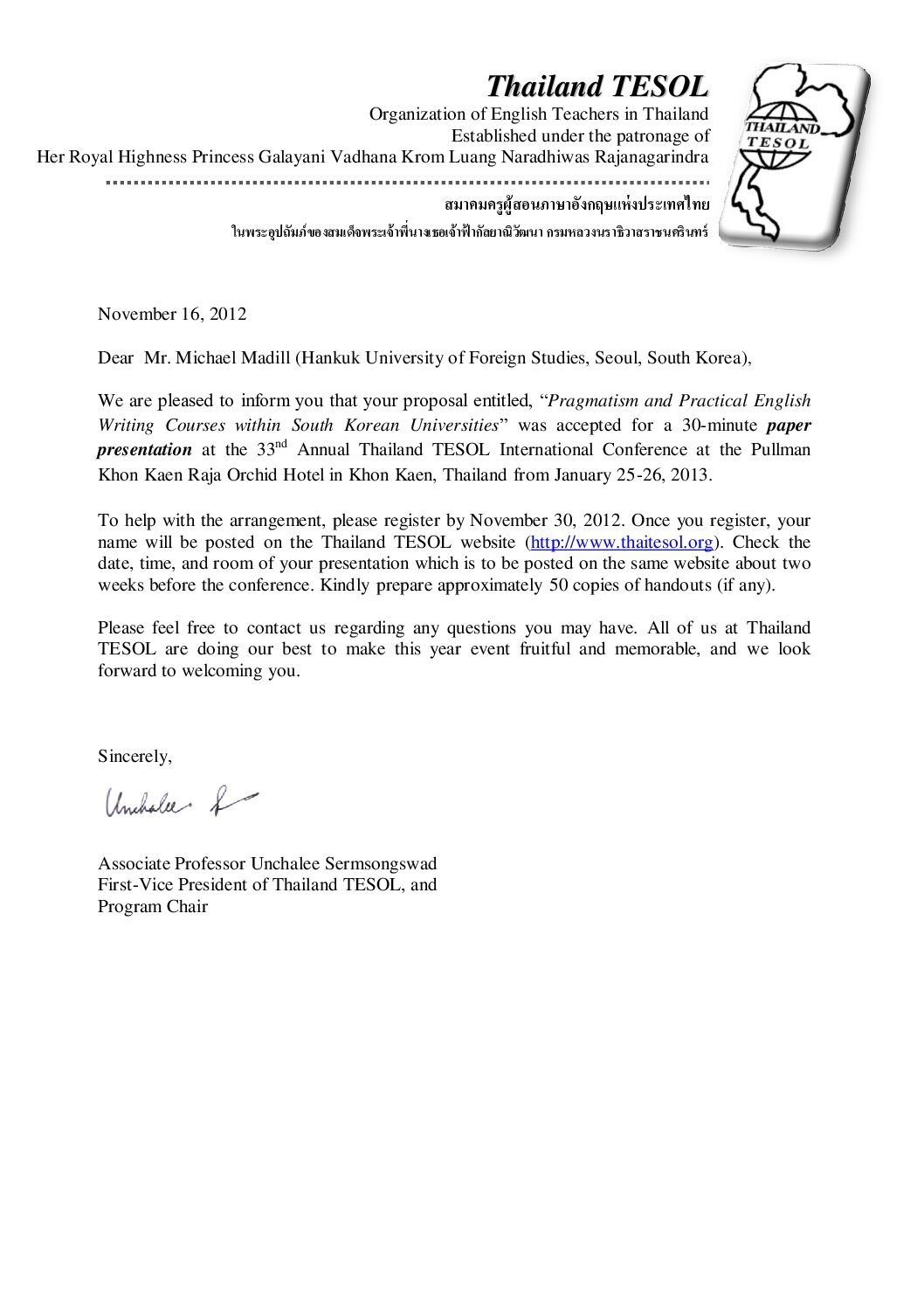
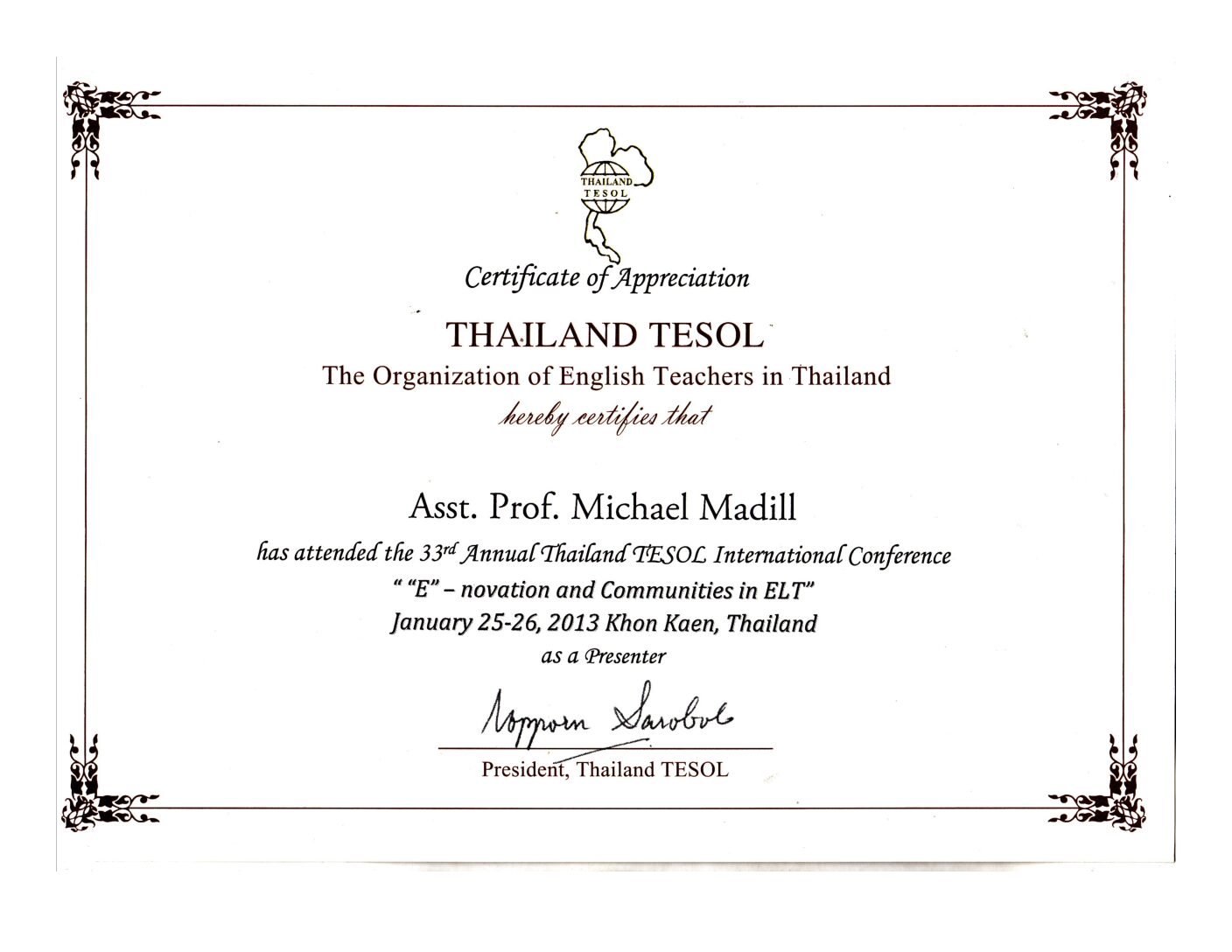
Pragmatism and Practical English Writing Courses within South Korean Universities
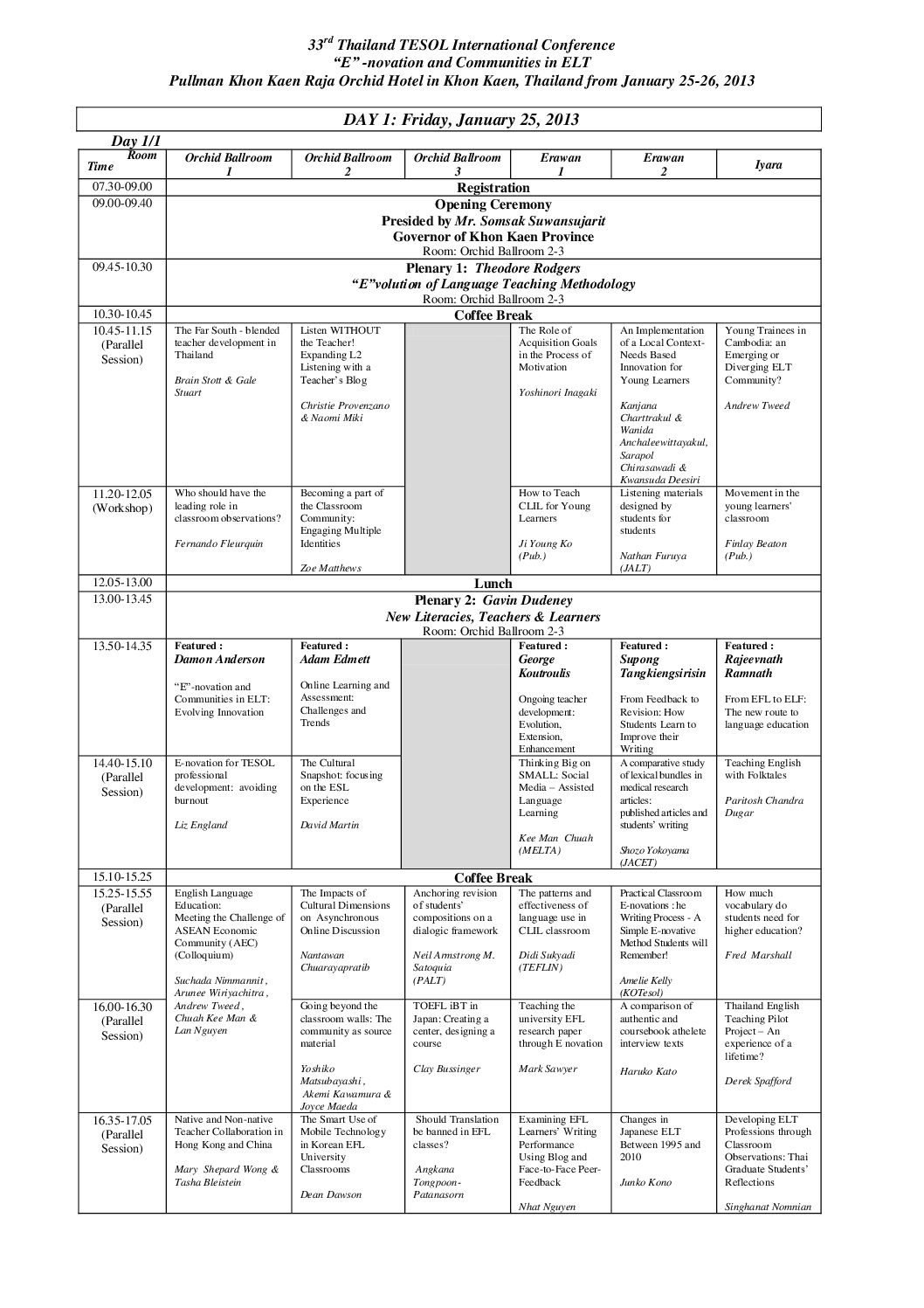
Thailand TESOL International Conference, Khon Kaen, Thailand · Jan 2013
This presentation explored the need for more practical, relevant, and learner-centered English writing instruction in South Korean universities. It examined how writing courses can better reflect authentic communication needs rather than focusing only on abstract or overly academic writing tasks.
The session highlighted the importance of genre relevance, student motivation, and real-world applicability in course design. It offered strategies for making university writing instruction more useful, engaging, and aligned with learner goals and future workplace communication needs.
See More Details on LinkedIn
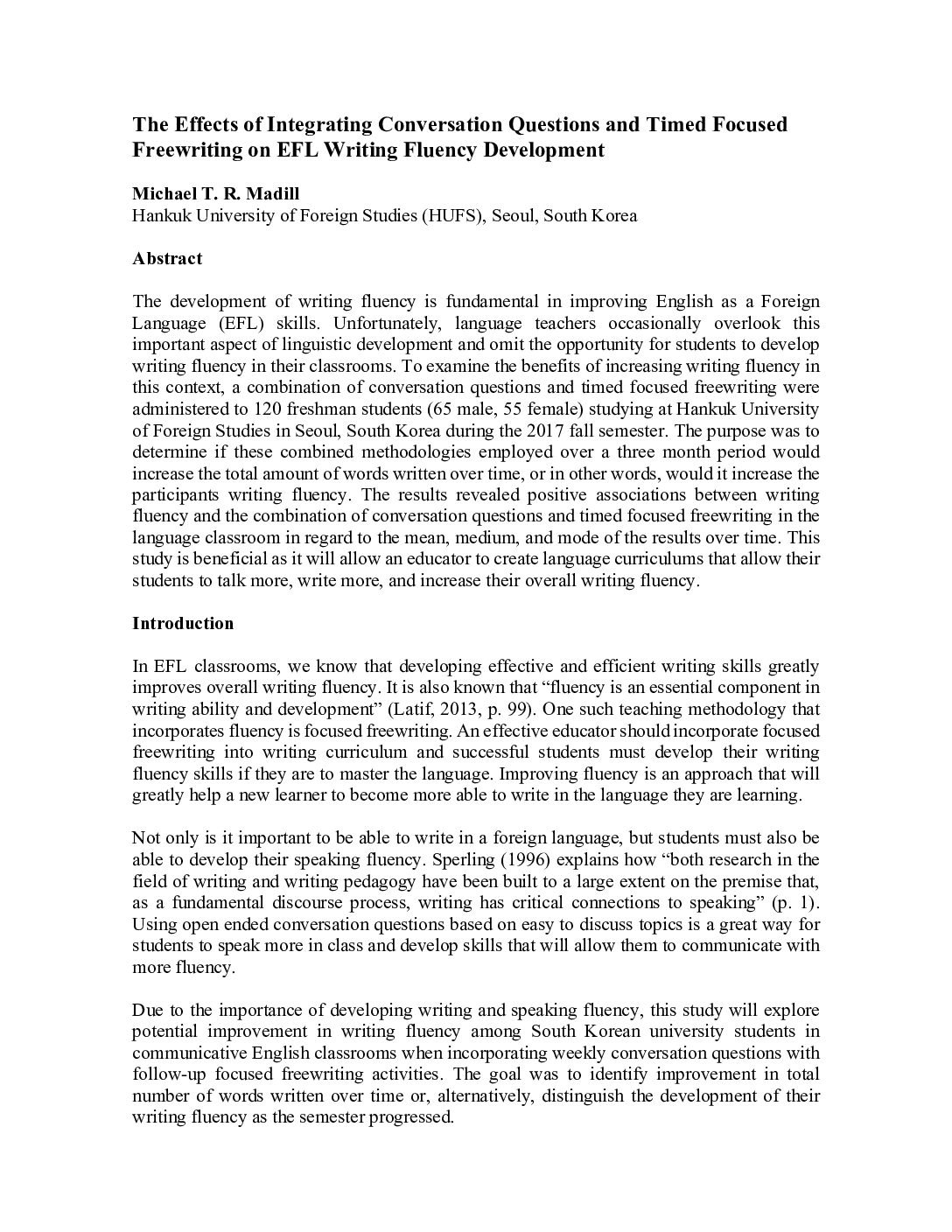
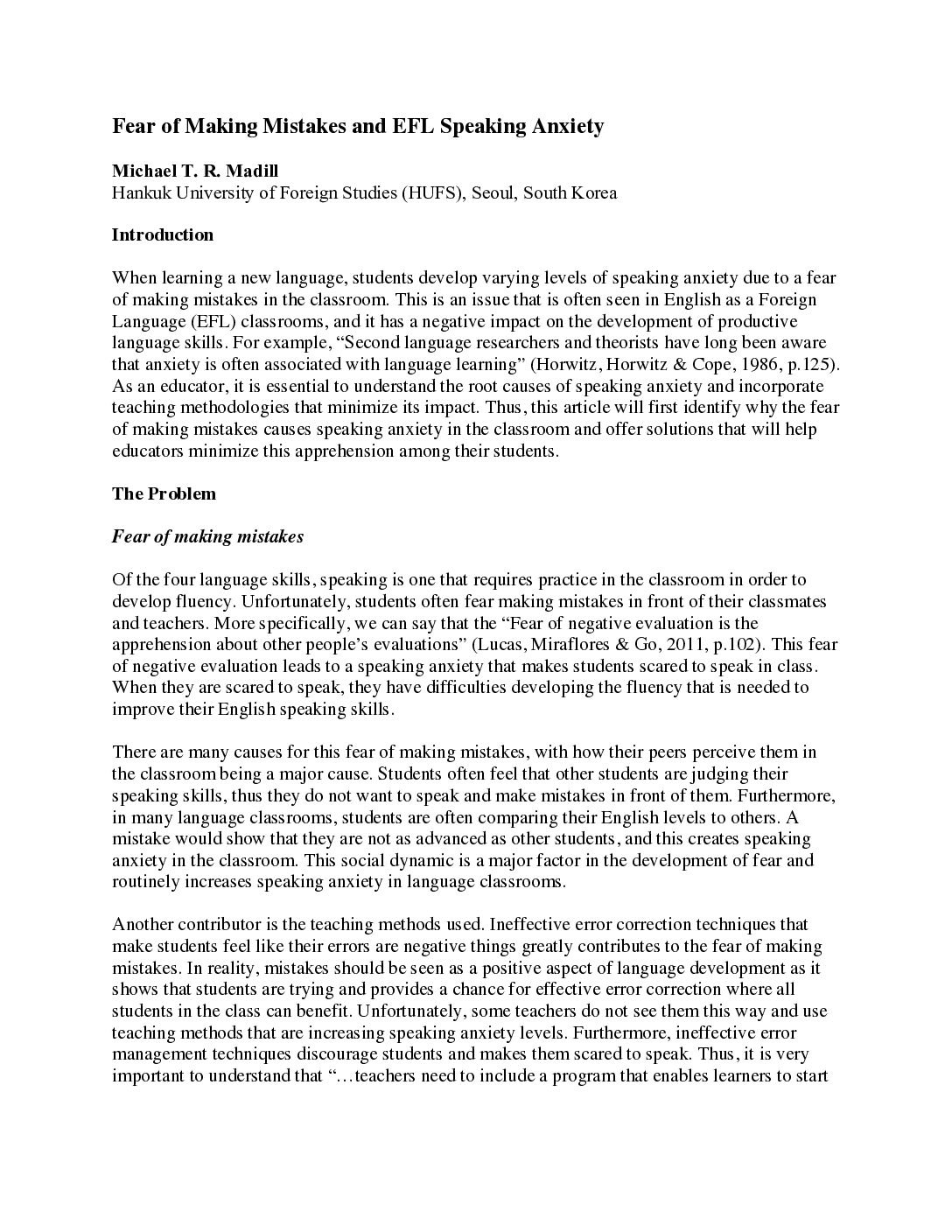
English Speaking Anxiety in South Korean Universities: Root Sources of Apprehension and Practical Resolutions
Clute International Education Conference, San Francisco, California, USA · Aug 2018
This conference presentation examined the underlying causes of communicative anxiety among South Korean university students learning English as a foreign language. It explored how fear of mistakes, limited speaking exposure, classroom dynamics, and performance pressure can reduce learner confidence and willingness to communicate.
The presentation also highlighted practical instructional strategies to reduce speaking apprehension, including supportive feedback practices, structured speaking tasks, and classroom design approaches that make students feel safer using English. The goal was to help educators create more confident, communicative, and learner-centered language environments.
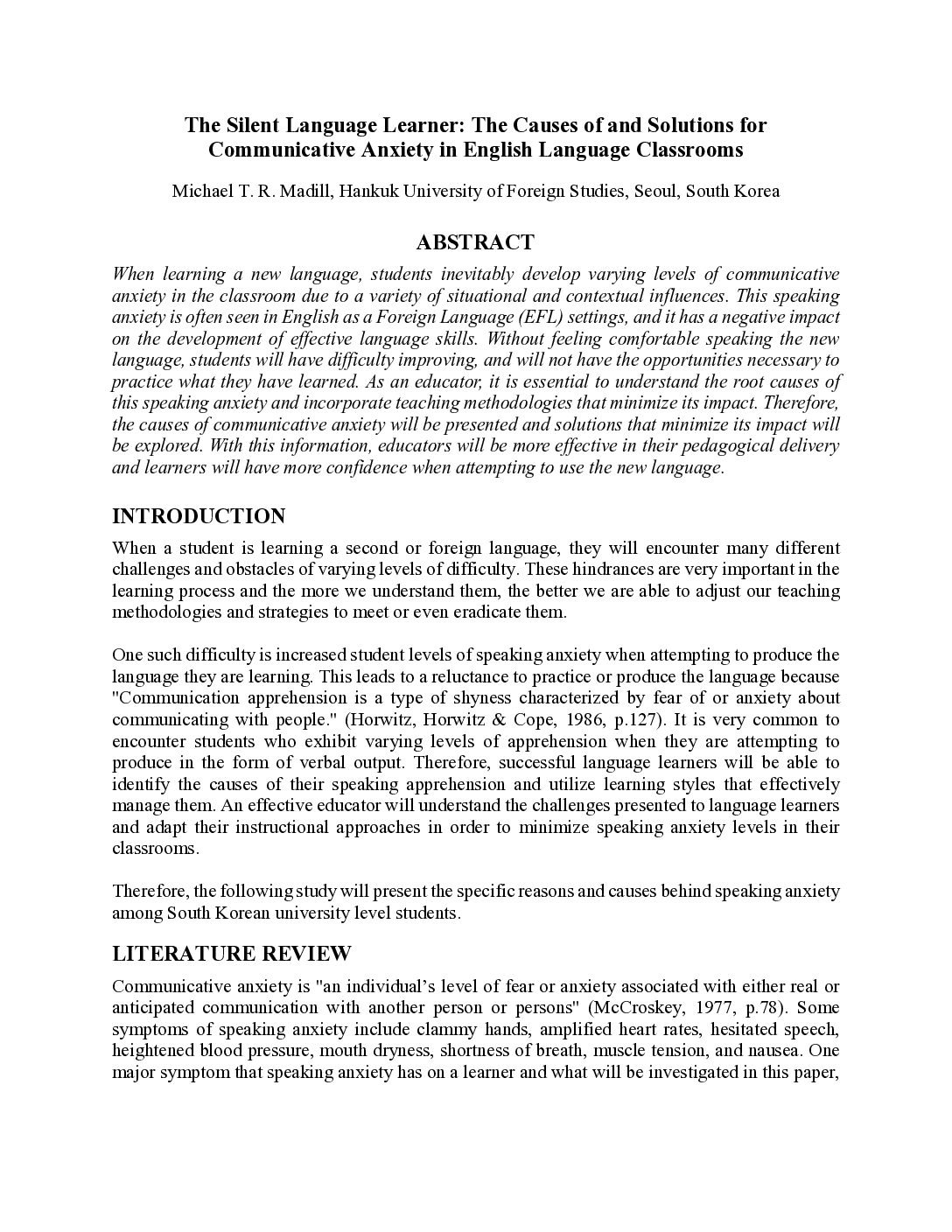
The Silent Language Learner: The Causes of and Solutions for Communicative Anxiety in English Language Classrooms
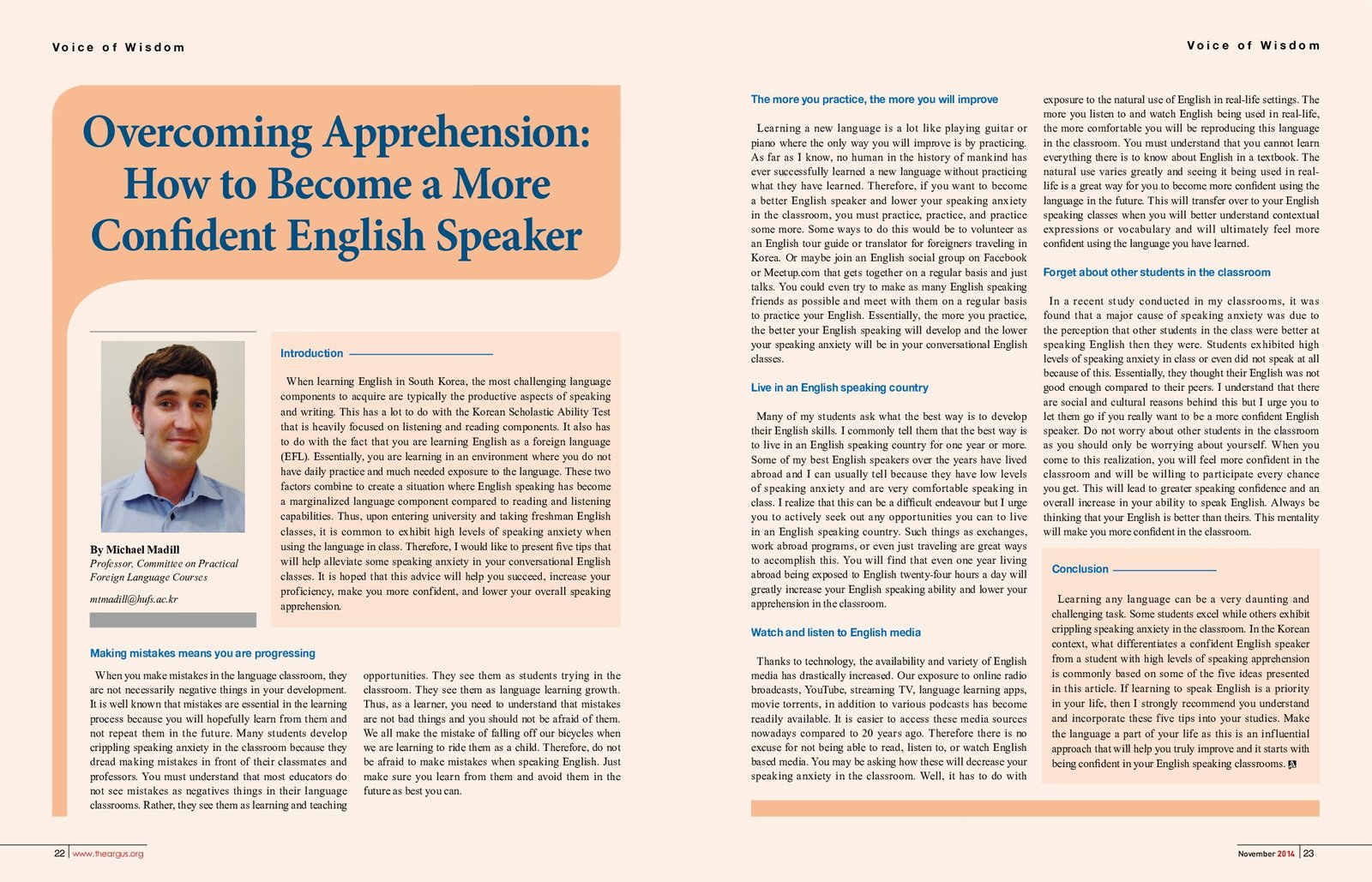
Cambodia TESOL International Conference, Phnom Penh, Cambodia · Feb 2018
This presentation explored why some language learners remain silent or reluctant to participate in English language classrooms, with a focus on the role of communicative anxiety in limiting oral language development. It examined the emotional, social, and instructional factors that contribute to learner hesitation and reduced classroom participation.
The session also presented practical teaching solutions to lower anxiety and encourage more active engagement, including supportive facilitation techniques, confidence-building activities, and classroom practices that normalize risk-taking and gradual speaking development.
Speaking Anxiety in English as a Foreign Language (EFL) Classrooms: Root Causes and Effective Teaching Methodologies
Cambodia TESOL International Conference, Phnom Penh, Cambodia · Feb 2017
This presentation investigated the root causes of speaking anxiety in EFL classrooms and the ways it interferes with learner confidence, participation, and language development. It focused on common triggers such as fear of negative evaluation, error sensitivity, lack of speaking practice, and classroom pressure.
The presentation also shared effective teaching methodologies for reducing anxiety, improving learner comfort, and strengthening oral participation. Emphasis was placed on instructional practices that build confidence while supporting meaningful language use in the classroom.
Scared to Speak: Underlying Elucidations that cause Communicative Anxiety among South Korean Tertiary EFL Students
Clute International Education Conference, New York, New York, USA · Aug 2015
This presentation examined the underlying causes of communicative anxiety among South Korean university-level EFL learners and how that anxiety affects speaking performance, classroom interaction, and language confidence. It explored the psychological and contextual influences that contribute to apprehension when students are asked to communicate in English.
The session also offered instructional implications for educators seeking to reduce anxiety and support more confident language use. By identifying the root causes of speaking apprehension, the presentation aimed to help teachers design more supportive, effective, and participation-friendly learning environments.
The Path to English Literacy: Analyzing Elementary Sight Word Procurement using Computer Assisted Language Learning (CALL) in contrast to Traditional Methodologies
Clute International Education Conference, San Francisco, California, USA · Aug 2014
This conference presentation compared the effectiveness of Computer Assisted Language Learning (CALL) and traditional teacher-led instruction in supporting elementary sight word acquisition in English as a foreign language contexts. It explored how different instructional approaches influence learner comprehension, acquisition, and motivation.
Findings suggested that both methods supported literacy development, while CALL demonstrated stronger associations with learner engagement and motivation. The presentation contributed to discussions on technology integration, early literacy, and evidence-based language instruction for young learners.
The Pragmatics of Korean University Practical English Composition: Current Deficiencies, Preferred Genres, and Effective Learning Strategies
Cambodia TESOL International Conference, Phnom Penh, Cambodia · Feb 2014
This presentation explored the teaching of practical English writing in Korean university contexts, focusing on current instructional gaps, learner needs, and the importance of genre relevance in writing development. It examined how writing courses can better align with real-world communication goals and student expectations.
The session also discussed preferred genres, learner perceptions, and effective strategies for improving motivation, authenticity, and practical writing performance. The goal was to support more relevant and learner-centered approaches to English composition instruction.
Decreasing Communicative Anxiousness in the Classroom: Effective Teaching Strategies that Alleviate Speaking Apprehension among Elementary Korean EFL Learners
Cambodia TESOL International Conference, Phnom Penh, Cambodia · Feb 2013
This presentation focused on communicative anxiety among elementary Korean EFL learners and the instructional challenges it creates for language development, confidence, and classroom participation. It examined how early speaking apprehension can affect willingness to communicate and long-term oral skill growth.
The presentation also outlined practical teaching strategies to reduce anxiety in young learners, including supportive classroom routines, age-appropriate speaking tasks, and feedback practices that encourage participation without increasing fear of mistakes.
Dolch Sight Word Acquisition and Motivational Variances when Comparing CALL and Traditional Teaching Methods in the Primary EFL Classroom
Korea Association of Primary English Education International Conference, Seoul, South Korea · Jan 2013
This presentation examined how Computer Assisted Language Learning (CALL) and traditional instruction influenced Dolch sight word acquisition among primary EFL learners. It focused on both learning outcomes and motivational differences between technology-supported and teacher-led instructional approaches.
The findings showed that both approaches supported word acquisition, while CALL demonstrated stronger links to student motivation and engagement. The presentation contributed to conversations on literacy development, instructional design, and the effective use of educational technology in primary language classrooms.
Pragmatism and Practical English Writing Courses within South Korean Universities
Thailand TESOL International Conference, Khon Kaen, Thailand · Jan 2013
This presentation explored the need for more practical, relevant, and learner-centered English writing instruction in South Korean universities. It examined how writing courses can better reflect authentic communication needs rather than focusing only on abstract or overly academic writing tasks.
The session highlighted the importance of genre relevance, student motivation, and real-world applicability in course design. It offered strategies for making university writing instruction more useful, engaging, and aligned with learner goals and future workplace communication needs.
Ready to Transform Your Training?
Whether you’re exploring a new role, redesigning learning programs, or modernizing your training ecosystem, I’m happy to start with a focused conversation.

Michael Madill, M.Sc.Ed., BBA
Specializing in learning strategy, instructional design, learning ecosystems, and AI-enhanced performance solutions.